



A new legal proposal is not a new bill at the border
On 25 November, the Office of the United States Trade Representative announced determinations in 14 investigations into structural excess capacity and manufacturing production. The economies covered include China, the European Union, Japan, South Korea, India and several Southeast Asian manufacturing centres. USTR says their policies burden or restrict US commerce and are actionable under Section 301 of the Trade Act of 1974. These are the administration’s findings, not an uncontested economic verdict. China rejected the overcapacity allegation, according to Reuters. The disagreement matters because the measures combine a domestic legal procedure with an international dispute about industrial policy. [1][2]
The announcement proposes remedies; it does not establish that every shipment already incurs a new charge. USTR sets 5 January 2027 as the deadline for written comments and requests to appear at hearings, with hearings beginning on 25 January. Reuters reports that the duties would not take effect before that hearing. The official release does not supply a final implementation date. An importer therefore needs to distinguish the announcement, consultation, final decision and entry of goods under the resulting rules. Collapsing those stages into a single tariff day would misstate both present costs and the timetable for adjustment. [1][2]
That procedural gap still has economic value. Businesses can reconsider purchase orders, negotiate contractual responsibility and examine alternative sourcing before a rule becomes effective. But preparation itself can cost money, even if the final measure is softened. Inventory, compliance work and duplicated supplier qualification absorb resources before any tariff revenue is collected. The policy can influence decisions immediately without creating an immediate customs liability. This is the first distinction needed to understand its market relevance: expectations may change today while realised costs remain governed by the rules currently in force.
Country ceilings cannot be added together like a shopping bill
The official proposals differ materially by economy. For the EU, Japan, South Korea, Taiwan and Switzerland, USTR describes rates up to 15%, net of most-favoured-nation rates and existing Section 301 tariffs, with exemptions for certain goods. Most-favoured-nation rates are the ordinary tariff schedule applied to eligible trading partners, not a special friendship discount. The words net of are crucial: they mean the proposal must be read alongside existing charges rather than automatically treated as another 15 percentage points on every product. USTR also explicitly accounts for other Section 301 actions and sectoral Section 232 measures. [1]
Vietnam illustrates the negotiating dimension. USTR proposes up to 35%, net of existing Section 301 tariffs, but says it would consider adjustments reflecting a 20% rate if a responsive reciprocal trade agreement is reached. India’s proposal is up to 25%, with a possible 17% rate tied to an agreement. Singapore’s proposal is up to 20%, with a possible adjustment to 10% following relevant commitments. These are conditional policy terms, not rates simultaneously payable on the same shipment, and not guarantees that negotiations will succeed. A country-level headline hides both the legal conditions and product exclusions. [1]
China’s proposal is different again: USTR describes up to 20% for goods outside specified annexes, net of the forced-labour-related Section 301 duty, up to 10% for goods in Annex A and exemptions for Annex B products. Reuters explains that earlier first-term Section 301 duties remain relevant, while the new measures would not simply stack on the separate forced-labour charges or sectoral national-security duties. The correct landed-cost calculation therefore requires the product classification, origin and applicable exclusions. Neither a universal 20% China rate nor a universal extra 15% Europe rate accurately describes the whole proposal. [1][2]
The dispute is about the organisation of production, not just a trade deficit
USTR’s country reports identify different combinations of industrial planning, preferential finance, production incentives, market-access restrictions and labour practices. The release names automotive, chemicals and pharmaceuticals among the relevant EU sectors; automotive, steel, semiconductors and optical fibre for Japan; and a much wider manufacturing list for China. Its argument is that these policies sustain production beyond what market conditions would support and reduce opportunities for US producers. Those claims explain the administration’s rationale, but the release does not independently establish that every factory in a named sector has uneconomic capacity. [1]
Capacity, output and exports are separate quantities. Capacity describes what equipment and labour can produce under specified conditions. Output is what is actually produced. Exports are the portion sold abroad, while domestic demand can absorb the rest. A large trade surplus alone cannot reveal factory utilisation, subsidies or profitability. Conversely, a profitable exporter can operate within an industry containing substantial excess capacity elsewhere. A serious assessment needs firm and sector evidence rather than treating the trade balance as a sufficient test. The breadth of the US allegations makes that distinction especially important.
There is also a conflict between policy objectives. Governments may support domestic manufacturing for resilience, employment, decarbonisation or technological capability, while trading partners experience the resulting exports as price pressure. Tariffs can restrict access to one market without dismantling the underlying production system. Factories may sell elsewhere, reduce prices or postpone investment. The announcement consequently changes the incentives around industrial policy more directly than it proves that global capacity will fall. Whether capacity is retired, redirected or expanded cannot be inferred from the proposed duty alone.
The importer’s obligation and the economic burden are not the same thing
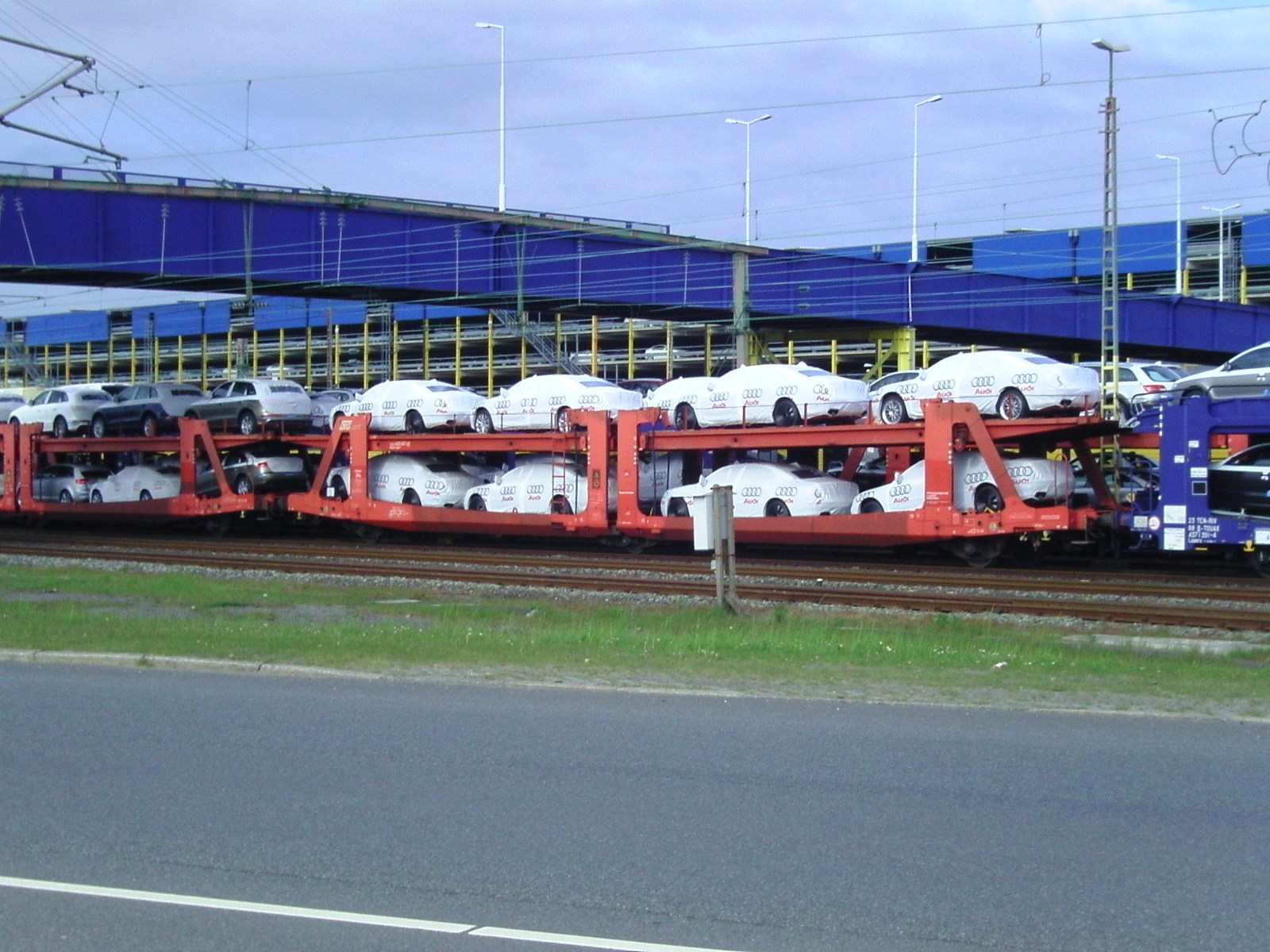
At the border, duties are administered through the import process. US Customs and Border Protection’s vehicle-import guidance illustrates why the exact classification matters: it lists ordinary rates of 2.5% for cars and 25% for trucks, with duty based on the price paid or payable. These are baseline guidance figures, not a calculation of the complete tariff currently applicable to every commercial vehicle, and not the new proposal’s final rates. Additional measures, exemptions and origin rules must still be checked. The archive photograph accompanying this article illustrates a manufacturing supply chain, not a verified tariff liability for Audi. [3]
The party responsible for the customs payment does not necessarily bear its entire economic cost. A foreign supplier may lower its selling price, a US importer may accept a smaller margin, a distributor may renegotiate terms and a consumer may pay more. The allocation depends on competition, substitution, contracts and demand. A supplier with a differentiated product can have more bargaining power than one competing with interchangeable alternatives. This makes pricing power a more useful analytical variable than simply labelling all exporters losers or all domestic manufacturers winners.
Consider a purely illustrative shipment with a customs value of $100 and an additional duty of 10%. The immediate charge would be $10 before other costs. If the exporter reduces the customs value to $95, the same percentage yields $9.50, but the exporter has also conceded $5 of revenue. This example is arithmetic, not a forecast or an actual rate under the announcement. It shows that exchange rates, negotiated prices and taxes interact rather than providing independent offsets. The final retail price also includes distribution and other expenses, so it need not change by the headline tariff percentage.
A company’s nationality is a poor substitute for its actual supply chain
For equities, the relevant bridge runs from the rules to shipments, then from shipments to earnings and cash flow. A European company manufacturing inside the US faces a different direct import exposure from one supplying the same market entirely from Europe. A US producer importing essential machinery or components may incur higher costs even when tariffs protect its finished product. An Asian supplier selling mainly outside the US cannot be assigned the same direct revenue risk as an otherwise similar exporter dependent on American customers. Headquarters alone cannot answer these questions.
Automotive supply chains make this especially visible. Finished vehicles, engines, electronics and other parts can cross borders under different classifications and legal measures. USTR’s explicit reference to existing Section 232 actions means the new proposal cannot be read as an automatic extra layer on all cars. Reuters reports that the proposed duties would not add to sectoral national-security charges on autos and other goods. A credible company analysis must establish which products are covered, where they originate and whether an exclusion applies before attaching a tariff effect to a listed manufacturer. [1][2]
The balance sheet adds another layer. Companies may need more working capital to hold inventory or finance duties before customers pay. A business with limited liquidity and weak pricing power can be exposed through cash flow even before annual revenue falls. Conversely, a strong balance sheet can fund supplier changes without ensuring that the new supply chain is economically superior. Contract disclosures, geographical manufacturing data, input costs and management’s explanation of realised margins are therefore more informative than a sector label. This article does not assign a stock-price target or claim that a named company has a quantified exposure unsupported by those disclosures.
Moving production is an investment decision, not a customs shortcut
The geographical reach is a defining feature of the proposal. Several economies used as alternative manufacturing locations are themselves covered, including Vietnam, Malaysia, Thailand and Indonesia. Mexico and Norway were investigated but had not received determinations at the time of the announcement. That procedural difference is not a permanent exemption or proof that shifting production there will be profitable. USTR also frames imports and investment linked to non-market economies as part of its concerns in multiple country findings. Simply moving an export route does not necessarily resolve the underlying policy dispute. [1]
Changing a genuine manufacturing location requires capital, trained workers, suppliers, quality assurance and regulatory approvals. Sending the same goods through another port is not equivalent to changing their customs origin. The economics of relocation must include the cost of building or qualifying capacity, the time before production becomes reliable and the risk that destination-market rules change again. A tariff-saving estimate that ignores those costs can make an expensive investment look artificially attractive. In complex industries, replacing a supplier also requires technical validation rather than only a lower invoice.
Trade diversion can create pressure in markets that receive displaced output. Greater availability may lower input prices for some buyers while intensifying competition for local manufacturers. Meanwhile, an American buyer facing more expensive imports may experience the opposite price movement. The same policy can thus produce cheaper goods in one destination and higher costs in another. That is a mechanism to investigate through trade volumes and realised prices, not an observed outcome already established by this announcement. Global market exposure remains uneven because the affected supply chains and customer markets differ.
Inflation, bonds and currencies have competing channels
Tariffs can raise the cost of covered imports, but the effect on consumer inflation depends on pass-through, exemptions, substitution and timing. Businesses may use inventories purchased earlier, renegotiate contracts or absorb part of the increase. The macroeconomic cost can also appear as weaker demand or delayed investment rather than a proportional rise in every retail price. One cannot translate a proposed country ceiling directly into an inflation forecast. The policy changes relative prices first; its effect on the general price level requires evidence about the goods actually purchased and their weight in spending.
Bond markets face an ambiguous combination. Greater price persistence can make monetary easing harder to justify, while weaker activity can support lower expected policy rates. Long-term yields also reflect term premiums, issuance and broader risk conditions. A move in government bonds on the announcement day would therefore not identify the tariff channel on its own. The relevant evidence includes subsequent inflation releases, business surveys, central-bank statements and the implementation terms. No single directional bond call follows mechanically from the proposed levies.
Currencies do not offer a guaranteed escape from the duty either. Depreciation can reduce a foreign supplier’s dollar price, but it can simultaneously make imported energy, equipment and foreign-currency debt more expensive for that supplier. An exchange-rate move also reflects monetary policy, capital flows and other news. For an exporter, the practical question is the currency of costs, revenues and liabilities together with any hedging. A stronger or weaker national currency is not enough to establish that a particular company’s tariff burden has been neutralised.
Legal durability can matter even when the immediate rate changes little
Reuters places the proposals against the Supreme Court’s February rejection of broad tariffs imposed under a national-emergencies law. Section 301 uses a different authority and an investigation into specified foreign practices. The administration is seeking a more durable legal foundation for tariff leverage and related trade arrangements. A more established statutory route is not a guarantee that every remedy survives litigation, and this article does not make a legal prediction. It does explain why a replacement measure can be consequential even when negotiated ceilings limit the immediate change in duty. [2]
Companies invest on horizons longer than a customs consultation. If restrictions are expected to persist, the comparison between expanding domestic production and continuing imports changes. If implementation remains uncertain, companies may preserve flexibility rather than commit capital. Both responses can be rational depending on the business. The economic significance lies partly in how credible and durable the rules appear, not merely in whether the latest headline contains a higher number. Stable but costly rules and unstable rules create different kinds of risk.
The bilateral agreements also turn the tariff schedule into a negotiating instrument. Lower conditional ceilings reward commitments that Washington considers responsive to its findings, while higher proposed rates preserve pressure where talks remain unfinished. This architecture creates country-specific deadlines and commercial uncertainty rather than one uniform global shock. It can encourage concessions without demonstrating that capacity problems have been resolved. Investors should separate an agreement that changes market access from evidence that productivity, employment or industrial profitability has subsequently improved.
What would show whether the reset actually changes business conditions?
The first checkpoints are documentary: the written-comment deadline on 5 January, hearings beginning on 25 January, and any subsequent final notices specifying coverage, rates, exclusions and effective dates. USTR’s published annexes and country proposals should be checked for the actual product rather than replaced with a broad country summary. Developments in the relevant trade negotiations can change the conditional ceilings, but the announcement does not guarantee a deal or a particular outcome. These are dated procedural watchpoints, not predictions. [1]
The next checkpoints are commercial. Customs entries and trade data can show whether covered imports change; company reporting can reveal price concessions, tariff expenses, inventory movements and supplier relocation costs. Margin changes need to be reconciled with sales mix and other input prices before being attributed to the policy. For domestic producers, higher selling prices must be considered alongside imported inputs and demand. A protected industry can still struggle if its customers cut spending or its own costs rise. The evidence should connect the legal rule to a realised business result.
The central lesson is that a tariff announcement has several distinct clocks: the legal process, the shipment cycle, the repricing of contracts and the investment cycle. Markets can respond before those clocks complete, but an initial price move cannot certify the eventual economic effect. Washington’s latest proposal is important because it combines broad industrial-policy allegations with differentiated trade commitments and a new legal route. Understanding its consequences requires following the fine print into actual costs and cash flows. The headline rate is a starting point, not an investment conclusion.
Sources & scope
An explanatory analysis using the dated publications below. Historical figures are not live readings; scenarios are conditional, and market co-movement does not establish causation. Not investment advice.
- 1. USTR, Determinations and proposed actions in 14 Section 301 manufacturing-capacity investigations (25 November 2026)
Primary source for the 14 economies, attributed US findings, country-specific proposed ceilings, netting language, product exclusions, unfinished determinations for Mexico and Norway, and the 5 January / 25 January 2027 consultation dates. Proposals and conditional negotiating terms are not represented as implemented duties.
- 2. Reuters, Trump unveils new tariffs over excess industrial capacity (25 November 2026)
Independent reporting on the legal-policy backdrop, China’s rejection of the allegations, existing tariff overlaps, negotiated caps and implementation after the January hearing. The separate Brazil investigation is not conflated with the 14-economy capacity action.
- 3. US Customs and Border Protection, Importing a motor vehicle
Official guidance explaining ordinary vehicle classifications, baseline duties and valuation. Used only to illustrate why product-level customs treatment matters, not as a complete current commercial tariff schedule or a calculation of the proposed measures.