


A diplomatic opening is not yet an investable settlement
Renewed negotiations have brought a difficult trade-off into the open. On 14 November, Volodymyr Zelenskiy said US negotiators had raised the possibility of Ukrainian withdrawal from Donbas in exchange for NATO membership after talks in Abu Dhabi. Russia has long opposed that membership, while Ukraine's president reiterated that Kyiv was not ready to concede territory. He also described security guarantees, a well-funded army and rebuilding support as elements of a comprehensive package that could be put to a referendum. This is a reported negotiating proposal, not an agreed territorial settlement or a confirmed NATO invitation. [1]
For markets, the essential distinction is between the possibility of lower conflict risk and the conditions that make investment durable. A diplomatic headline may alter expectations quickly. A factory, housing project or power network requires protection, enforceable contracts and a credible stream of financing over years. The reconstruction opportunity therefore cannot be assessed by the size of physical destruction alone. Its commercial value depends on whether security arrangements reduce the probability of renewed loss, and whether public commitments become payments that contractors and lenders can rely on.
Three financial questions that must not be combined
Ukraine needs resources to sustain government services, support defence and rebuild damaged assets. These needs overlap operationally but are not interchangeable in accounting. In April, the EU Council finalised the legislation underpinning a €90 billion support loan for 2026 and 2027. Of that framework, €30 billion is for economic and budgetary support and €60 billion for defence industrial capacity, including procurement. Neither the total framework nor its defence component should be relabelled a civilian reconstruction fund. The distinction affects which companies can participate, when money is available and what expenditure is eligible. [2]
The joint recovery assessment released in February by Ukraine, the World Bank, the European Commission and the United Nations estimated almost $588 billion of reconstruction and recovery needs over the next decade, based on damage through 31 December 2025. This is an estimated requirement, not financing already committed or a forecast of contractor revenue. It also uses a different currency and horizon from the EU loan. Adding the figures or presenting one as a simple percentage of the other would disguise differences in scope, timing and purchasing power. [4]
Europe is using its balance sheet as a geopolitical instrument
The EU framework is financed through borrowing on capital markets and backed by EU budget headroom. The Council says repayment is to come from reparations due by Russia to Ukraine. That arrangement joins foreign policy to public financing: Ukraine receives support now, while the ultimate repayment source depends on a future process. For analysis, the legal structure and the backing of EU borrowing matter more than treating anticipated reparations as cash already collected. The framework cannot remove uncertainty about when, how or whether Russia will make those payments. [2]
The market channel is not a mechanical prediction that every European sovereign yield must rise. Additional common borrowing, national contributions, defence spending and growth effects interact with monetary policy and investor demand. The important comparison is between financing capacity and continuing obligations. If support becomes predictable, it can stabilise planning for Ukraine and suppliers. If political disputes delay allocations, the same headline commitment can be less useful economically. European fiscal credibility rests partly on the ability to deliver agreed programmes without creating repeated last-minute funding emergencies.
Frozen Russian assets are a separate legal and financial question
A November discussion hosted by Carnegie Europe highlighted concern about Ukraine's 2027 funding position and disagreement over whether frozen Russian assets should be used more extensively. Its contributors differ on legal interpretation, political feasibility and strategic desirability. That debate should not be mistaken for an adopted confiscation policy. Immobilising central-bank reserves, using income generated by them and permanently transferring the principal are different actions with different implications for property rights, sovereign immunity and financial institutions. [5]
For reserve managers and intermediaries, the relevant questions include jurisdiction, the asset holder's legal status and the protections around any new mechanism. Possible effects on reserve allocation cannot be reduced to a claim that the dollar or euro will inevitably gain or lose. Currency use also depends on liquidity, settlement networks, available safe assets and trade relationships. For European institutions, litigation or operational obligations may matter alongside the strategic benefit of support. A funding solution should be assessed through its actual legal design, not through the size of assets mentioned in political debate.
Reconstruction starts with functioning systems, not landmark projects
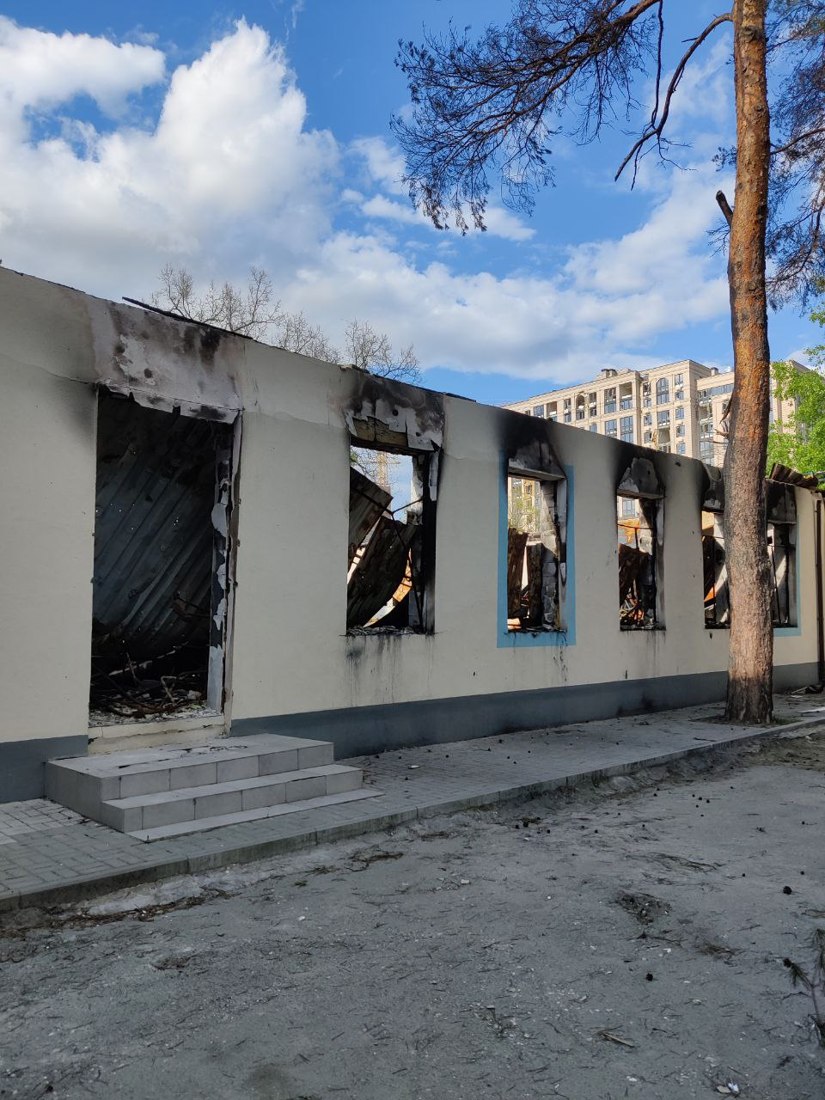
The recovery assessment identifies a broad restoration task, while Ukraine's 2026 priorities include destroyed housing, demining, public investment and support across economic sectors. It records more than $15 billion of priority projects and programmes for 2026 and at least $20 billion of needs already met since February 2022 through urgent repairs and early recovery. These are distinct reported measures, not two components of a fully funded future pipeline. Reconstruction has already begun while the war continues; a settlement would change its risk conditions rather than create the activity from nothing. [4]
The sequencing is commercially important. A repaired road offers limited benefit if a destination has no reliable electricity or safe access. Demining can be a prerequisite for agriculture, transport and building activity. Schools and housing support labour availability and the return of residents, even when they do not generate a direct revenue stream for an investor. The most useful projects may be enabling infrastructure rather than the most visible buildings. Procurement priorities should consequently be read in terms of which systems unlock productive activity and how maintenance will be financed after construction.
Defence and civilian suppliers face different opportunity sets
The EU's July approval of UK participation broadened the pool of defence manufacturers from which Ukraine can procure under the loan. It did not make every European or British company eligible for every project, nor remove the programme's conditions. The change matters because procurement rules shape competition and delivery capacity. Defence exposure should be analysed through approved suppliers, product requirements, production constraints and funded contracts. Civilian construction demand belongs to a different project pipeline and cannot be inferred from the €60 billion defence allocation. [3]
Potential civilian beneficiaries include equipment suppliers, engineering firms, transport operators and manufacturers of building materials. Yet revenue depends on tender awards, local capacity, sourcing rules and project completion. Labour shortages, insurance costs and financing can absorb an apparently attractive margin. Banks may support payments and business lending, but also face credit risk and currency mismatches. A broad reconstruction label therefore provides a starting point for research, not an investment verdict. The stronger evidence is a specific contract with a credible payer, manageable delivery risk and a business able to convert sales into cash.
Lower conflict risk would travel through several markets
A durable reduction in hostilities could lower some insurance and transport burdens, improve confidence and make longer investment horizons more practical. It could also change expectations around European defence needs, energy security and regional trade. These channels would not necessarily move in the same direction or at the same speed. Maintaining an effective Ukrainian army remains part of the security debate, so negotiations do not automatically imply an immediate collapse in defence procurement. Similarly, a peace proposal does not by itself reopen every trade route or lift sanctions. [1][2]
Valuation adds another distinction. Even a genuine improvement in operating prospects can disappoint investors if prices already assume rapid stabilisation and profitable rebuilding. Conversely, a company with less headline exposure may benefit through lower logistics costs or stronger customer demand. No specific share-price, bond-yield or currency reaction is asserted here. The analysis concerns transmission mechanisms: which costs might fall, which demand might become fundable and which balance sheets remain vulnerable if negotiations fail. That is more informative than treating a diplomatic announcement as a universal buy signal.
The evidence that would make the reconstruction case stronger
A stronger case would combine a verifiable reduction in violence with operational security guarantees, sustained budget support and financed civilian projects. Those conditions could support investment without requiring an assumption that political disagreements disappear. A weaker path would feature repeated negotiation headlines but unstable funding, disrupted infrastructure and delayed procurement. A renewed escalation would increase repair needs while reducing the capacity to carry them out. These are conditional paths, not assigned probabilities or predictions of the negotiating outcome.
The practical watchlist is therefore concrete: the status of any signed agreement, the institutions responsible for enforcing guarantees, actual disbursements under existing programmes, tender awards, payment schedules and restoration of essential services. Company reporting should show funded backlog, cash conversion and cost assumptions rather than only a large addressable-market estimate. November's talks make security and financing inseparable. Ukraine's needs are already immense, but the investable opportunity will be determined by the reliability of the arrangements that turn those needs into protected, funded and completed work.
Sources & scope
An explanatory analysis using the dated publications below. Historical figures are not live readings; scenarios are conditional, and market co-movement does not establish causation. Not investment advice.
- 1. Reuters, US floated Donbas withdrawal for NATO membership, Zelenskiy says (14 November 2026)
Reported negotiating proposal and Ukrainian conditions; not an agreed settlement or confirmed NATO invitation.
- 2. EU Council, finalisation of the €90 billion Ukraine support loan (23 April 2026)
2026-2027 framework, €30 billion budgetary and €60 billion defence components, EU borrowing and repayment structure.
- 3. EU Council, UK participation and implementation update (22 July 2026)
Procurement eligibility; €8.1 billion disbursed at the July update, not a current November total.
- 4. World Bank and partners, fifth recovery and reconstruction assessment (23 February 2026)
Almost $588 billion of needs over ten years, assessed through 31 December 2025; 2026 priorities and early recovery already achieved.
- 5. Carnegie Europe, can Europe fund Ukraine without Russian assets? (12 November 2026)
Contrasting expert views on funding and asset use; opinion and legal debate, not an adopted policy.