



A surplus of oil is not a surplus of usable fuel
The latest oil outlook creates an apparent contradiction: recovering supply is loosening the global balance while diesel remains expensive. On 13 November, the International Energy Agency projected a return to surplus in the fourth quarter as Gulf exports recovered faster than consumption. Yet European diesel prices were still 77% above their pre-war level. These developments can coexist because the commodity extracted from an oilfield is not the finished fuel required by a truck, a farm or a heating system. Production, conversion and delivery are separate constraints. Removing the first does not automatically remove the others. [1]
The distinction matters beyond energy trading. A manufacturer may benefit from lower crude-related input costs while its distribution bill stays elevated. A government can see a softer international oil benchmark without an equivalent improvement in household purchasing power. An investor holding a producer and one holding a refiner can face different earnings drivers. The central question is therefore where the system remains constrained, not whether every company or consumer labelled oil-sensitive will benefit from the same price move. A broad surplus headline is useful, but insufficient as a map of economic exposure.
Recovering Gulf flows change the balance, not the security risk
Global oil supply increased by 3 million barrels a day in September and another 2.3 million in October, reaching 105.4 million barrels a day. These are monthly supply estimates, not a forecast of daily deliveries to any individual refinery. The rebound helped shift the IEA's assessment toward excess supply. Gulf oil exports excluding Oman reached 18.4 million barrels a day in October, but remained 26% below pre-war levels. Recovery from a disrupted base therefore should not be described as complete normalisation. [1][2]
The composition of that recovery is especially important. Crude flows improved more than exports of refined products and liquefied petroleum gas, which remained at roughly half their pre-war level. Continued attacks on shipping can still interrupt deliveries, raise insurance costs and alter the routes available to buyers. A recovered loading volume does not establish that transport has become safe, inexpensive or predictable. For markets, the relevant distinction is between a larger quantity entering the supply chain and a lower risk premium throughout that chain. The first can improve before the second. [1]
Refineries determine which part of the barrel reaches consumers
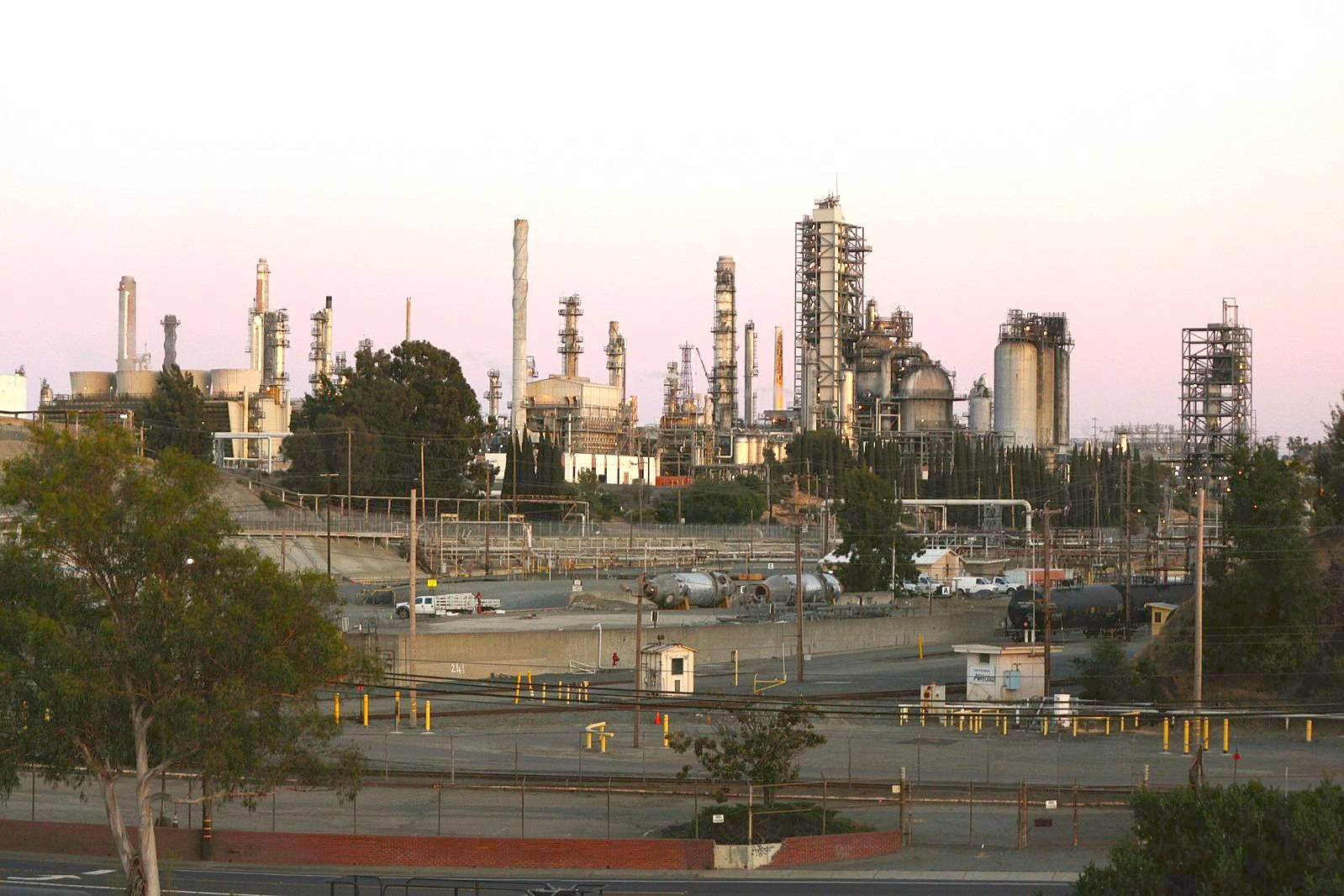
Refining is the conversion stage between crude availability and finished-fuel supply. Global refinery runs fell by 1.3 million barrels a day in October to a seasonal low of 81.3 million, with a rebound to 84.7 million forecast for December. The December figure is an expectation, not completed production. Meanwhile, attacks on Russian energy infrastructure continued to restrict diesel exports, adding to losses from the Middle East. Together, lower throughput and disrupted product shipments explain why a loosening crude balance does not immediately eliminate diesel scarcity. [2]
A refinery also cannot turn every additional barrel into whatever product currently commands the highest price. Its equipment, the characteristics of the crude it processes, maintenance schedule and operating limits influence the mix of outputs. Changes in operating conditions can adjust that mix, but not without constraints. Increasing total runs is therefore not identical to increasing diesel availability in the region where it is needed. The practical watchpoints are the recovery of functioning conversion capacity and actual product arrivals. Installed capacity on paper is less informative than sustained throughput, usable yields and access to the destination market.
The crude-to-diesel gap matters more than one headline quotation
The IEA's assessment recorded North Sea Dated crude falling 32% from an early-October peak of $136 a barrel to about $93 at the time of writing. European diesel fell only 11% over the same period, to nearly $180 a barrel. Those figures describe dated physical-market assessments, not live futures prices or retail pump prices. They show that the decline in the crude input was much larger than the decline in the finished product. The difference makes the refining and delivery bottleneck visible even as the overall supply narrative improves. [1]
Subtracting approximately $93 from approximately $180 gives an illustrative gap of about $87 a barrel. That calculation is not a measured refinery profit: the benchmarks do not capture the whole product slate, exact feedstock, location, transport, energy use or operating costs. A crack spread, the market difference between a product price and a crude reference, is a useful indicator of scarcity and potential conversion economics, but remains distinct from a company's realised margin. Treating this rough comparison as a guaranteed return would erase precisely the operational and logistical risks responsible for the gap.
Producers, refiners and transport operators face different pressures
Upstream producers primarily earn from extracting and selling hydrocarbons, so a sustained decline in realised crude prices can reduce revenue unless volumes, costs or hedges offset it. Refiners purchase crude and sell a basket of products, making relative prices and operating reliability central. A wider diesel differential can help a refinery capable of producing and delivering it, but cannot rescue an offline unit or guarantee that higher freight and energy bills are covered. Energy equities should consequently be assessed by their actual activities rather than assigned a single direction from the oil benchmark.
Transport operators generally buy the finished fuel. Their exposure depends on consumption, contract terms and the ability to pass costs to customers through fuel surcharges. An operator with fast contractual pass-through faces a different margin risk from one with fixed prices and delayed renegotiation. Manufacturers and retailers can inherit those costs through distribution charges even without buying diesel directly. Shipping companies also have distinct vessel fuels and commercial arrangements; European diesel is not a universal proxy for every freight segment. Balance-sheet analysis needs the fuel actually used, the timing of purchases and the cash-flow effects of payment terms.
Cheaper crude can coexist with stubborn household costs
The inflation channel runs through finished products, distribution and domestic pricing rules, not crude alone. Taxes, exchange rates, inventories and competition affect the amount and timing of retail pass-through. A 32% decline in one crude assessment therefore does not imply a 32% fall in the fuel bill or a proportional reduction in consumer inflation. Conversely, an elevated diesel quotation does not prove that every retail price will increase. The relevant evidence is the movement in actual purchased fuel and the degree to which businesses absorb or transmit it. [1]
For central banks, easing crude and persistent transport costs complicate the distinction between an initial supply shock and broader inflation persistence. Lower upstream prices can offer relief while bottlenecks delay the consumer benefit. Fiscal measures can temporarily cushion households or businesses, but shift part of the burden to public finances and may weaken incentives to conserve fuel. The policy trade-off is distributional as well as aggregate: protecting vulnerable users is not the same as subsidising all consumption. Durable relief depends on restored usable supply and delivery, rather than a favourable benchmark headline alone.
Next year's demand recovery is not mainly a road-fuel boom
The IEA forecast global oil demand falling by 2.7 million barrels a day in 2026 to 102.3 million, before recovering by 2 million barrels a day in 2027. Its public highlights attribute around 80% of next year's increase to LPG, ethane and naphtha as supply chains normalise, while transport fuels are expected to gain only modestly. These are forecasts, not realised consumption. The distinction also prevents an annual average from being compared directly with October supply as if both described the same period. [1][3]
The product mix changes the investment interpretation. Petrochemical feedstocks support different facilities and end markets from road diesel. A recovery led by those feedstocks need not restore the same commercial conditions as a transport-led expansion. Electrification and vehicle efficiency can constrain road-fuel growth even while total oil consumption rises. At the same time, replacing vehicles and infrastructure takes time, so those structural forces do not remove an immediate diesel bottleneck. Short-run fuel scarcity and slower long-run transport demand can both be true; investment decisions should distinguish the two horizons rather than force one to invalidate the other.
What would turn a crude recovery into broader economic relief?
A constructive path would combine sustained Gulf crude exports with higher refinery runs and recovering finished-product deliveries. Diesel differentials could then narrow as buyers face fewer shortages, although the speed of retail relief would still depend on local contracts and taxes. A less favourable path would leave crude plentiful while attacks, maintenance problems or freight constraints keep conversion and distribution costly. A renewed disruption could reverse the supply recovery itself. These are conditional mechanisms, not assigned probabilities or a claim that one outcome is inevitable.
The useful monitoring sequence is physical: actual refinery throughput against the projected December recovery, product exports from affected regions, inventories available to buyers, and freight and insurance conditions. Market prices then help show whether these improvements are reaching the scarce products. Company reporting should be checked for realised margins and fuel-cost pass-through rather than inferred from a benchmark spread. The latest oil assessment offers a genuine prospect of relief, but that relief must travel through functioning refineries and reliable logistics before it reaches economic activity. Until then, a surplus of barrels and a shortage of usable diesel remain compatible.
Sources & scope
An explanatory analysis using the dated publications below. Historical figures are not live readings; scenarios are conditional, and market co-movement does not establish causation. Not investment advice.
- 1. Euronews, European diesel prices stay high as global oil supply overtakes demand (13 November 2026)
Accessible reporting of the IEA assessment: European diesel 77% above pre-war levels; dated crude and diesel prices and changes; Gulf exports excluding Oman and product-export shortfalls. These are report-time observations, not live quotations or retail prices.
- 2. Newsquawk, IEA Oil Market Report highlights (13 November 2026)
Accessible reproduction of the report's supply, demand and refining highlights: October supply 105.4 million barrels/day, refinery runs 81.3 million and forecast December runs 84.7 million. Its separate analyst commentary is not presented as an IEA finding.
- 3. International Energy Agency, Oil Market Report, November 2026 (13 November 2026)
Public highlights checked through indexed page text, including the projected 2027 demand composition. Direct automated access was blocked at verification; the subscription report was not accessed. Annual forecasts are kept distinct from monthly supply estimates.