
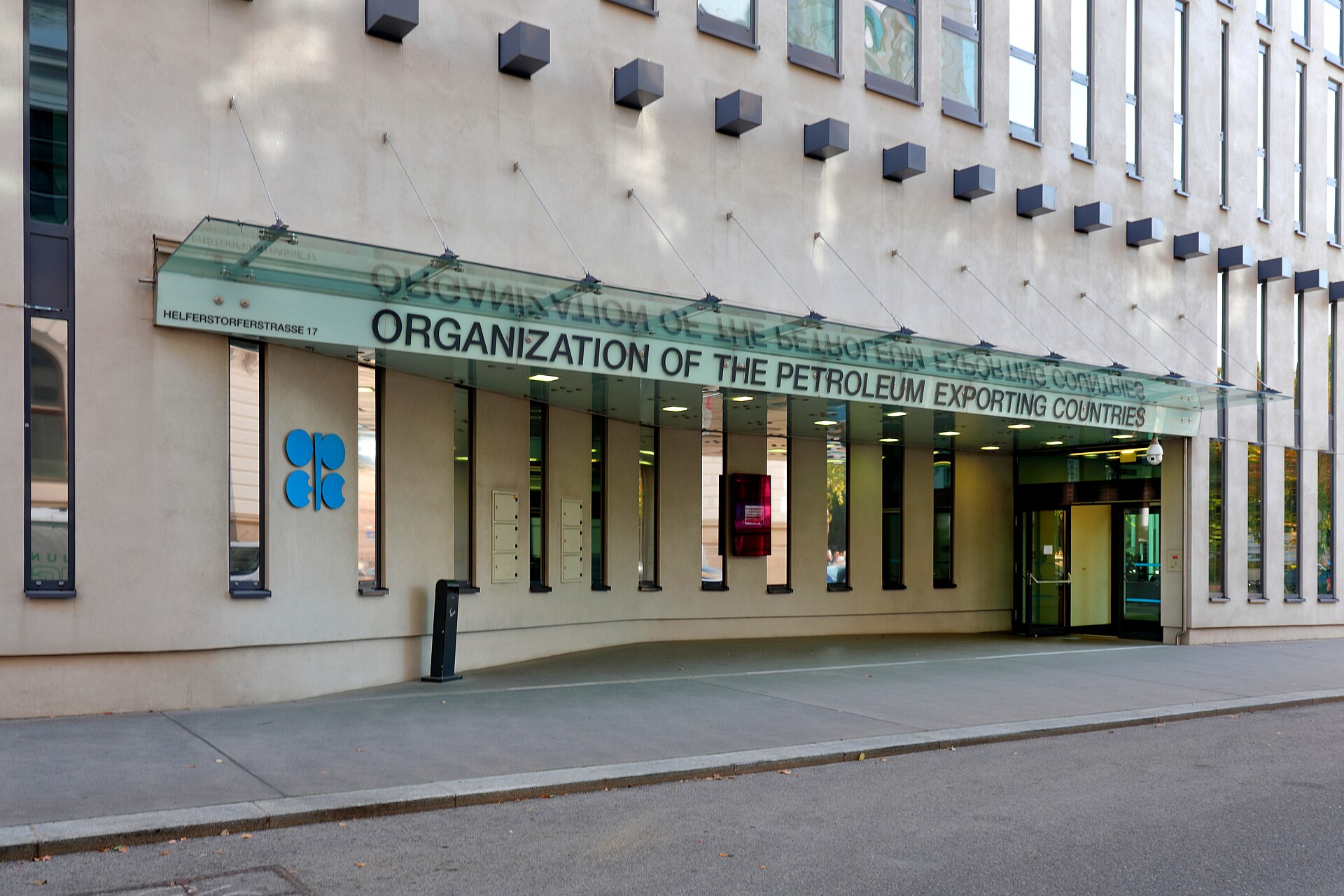



A quiet decision with a loud backdrop
OPEC+ ministers are scheduled to hold four meetings on Sunday 29 November, starting with a virtual gathering at 13:00 GMT. Reuters reported on Friday, citing three sources, that the group had reached an agreement in principle to keep output targets unchanged for the first quarter of 2027. Bloomberg had earlier reported delegates considering a rollover of current quotas to January. Either way, the headline outcome looks like continuity. [1][2]
Continuity is not the same as calm. The alliance had planned to set 2027 targets using the results of an external review of how much each member can physically produce. Disagreements over some estimates, including objections from Iraq to the assessment it received, have delayed that step. Russian Deputy Prime Minister Alexander Novak said the coalition aims to complete the audit by year end. The rollover is therefore a pause, not a resolution. [1][2]
For the seven countries that operate additional voluntary adjustments, the most recent official decision came on 1 November, when they kept their September required production for December and confirmed the next meeting for 29 November, according to OPEC. That monthly rhythm shows how incremental the group’s management has become in a highly uncertain market. [3]
A smaller alliance without one of its swing producers
The United Arab Emirates left OPEC and OPEC+ on 1 May 2026 after years of objecting to quotas that limited its sales, the Associated Press reported, as summarised by Triple Frontiers. The UAE was pumping about 3.4 million barrels a day before the war began on 28 February, against a capacity analysts put at about 5 million. Jorge Leon of Rystad Energy said at the time that OPEC was losing one of the few members able to raise output quickly. [4]
This matters because the cartel’s influence rests on spare capacity: the ability to add or withhold barrels on demand. A member that leaves with significant unused capacity takes part of that lever with it and can become a competitor rather than a partner. Al-Monitor notes that the remaining 21-country coalition still pumps around 35% of the world’s oil, so it remains the most important single supply manager, but with a thinner cushion. [2]
The departure also creates a precedent. If quota frustration can end in exit, every other member with expanding capacity gains bargaining power. Iraq’s push for room to pump more, reported by Bloomberg, should be read in that light. The capacity review is the alliance’s attempt to replace negotiation by grievance with a common, externally verified baseline. [1]
Why an external capacity audit is so sensitive
The review, conducted by Dallas-based consultants DeGolyer & MacNaughton, is described as the most comprehensive external evaluation yet of members’ production capability. Its findings have been kept closely guarded even inside OPEC+. OPEC representatives held a closing meeting for the assessment on 16 November and called it a historical milestone. [1]
Capacity numbers translate directly into money. Quotas have historically been set with reference to what each country can produce, so a higher assessed capacity supports a claim for a higher target and more revenue. A lower figure can feel like a permanent downgrade. That is why disputes arise even over technical estimates: they are, in effect, negotiations over future market share.
There is a further complication. Actual output from Gulf producers has been severely disrupted since the US-Israel-Iran war began, according to Al-Monitor. Distinguishing what a country could produce from what it currently can, given damaged infrastructure or blocked routes, is hard. An audit that assumes normal conditions may overstate available supply; one that reflects current disruption may freeze a temporary weakness into a lasting quota. [2]
A price that swings between surplus and war risk
Brent fell 2.8% to 89.99 dollars a barrel on Monday 23 November and touched 88.60 dollars, its lowest since 27 August, according to Reuters figures cited by Triple Frontiers. The same explainer noted that about 2 million barrels a day of cuts were due to expire and that forecasters expected a surplus next year. [4]
Within two days, the picture changed. After the Houthis claimed an attack on Saudi Arabia’s Ras Tanura refinery, Brent rose 3.5% to settle at 94.61 dollars on 25 November. Reuters, via CNBC, also linked part of the support to uncertainty about OPEC’s 2027 policies, especially with the UAE no longer restricted by the group. [5]
This volatility explains the appeal of a rollover. Raising targets into a feared surplus could deepen a price slide; cutting them while Gulf infrastructure is under attack could look reckless if supply is suddenly lost. Holding steady preserves options. It also signals that the group is not yet ready to state how it will share the market in 2027.
Producers, importers and the distribution of risk
A rollover affects participants differently. Members producing close to their targets gain little from unchanged quotas, while those with idle capacity, such as Iraq according to its own arguments, bear the opportunity cost of barrels they could sell. Outside the alliance, the UAE can now set output according to its own commercial and physical constraints, which makes it a source of potential supply that OPEC+ no longer coordinates. [1][4]
For oil-importing economies, the main variable is not the quota itself but the combination of quotas and disruption. Unchanged targets in a market fearing surplus tend to support prices modestly; unchanged targets while Gulf infrastructure is attacked offer no extra cushion. Importers in Asia and Europe are therefore exposed less to Sunday’s decision than to whether security incidents reduce actual exports.
Financial markets add a further layer. Futures curves, producer currencies and the shares of energy companies respond to expectations, so a decision that only confirms what was already reported may have little lasting effect. A surprise on the capacity review, by contrast, could change expectations for 2027 supply. These are mechanisms, not predictions, and their size will depend on what ministers actually publish.
How to read Sunday’s outcome without forecasting it
Three elements deserve attention. First, the formal decision on first-quarter targets, which current reporting suggests will be unchanged. Second, any timetable or method for using the capacity review, which will indicate whether Iraq’s objections are being accommodated. Third, the language on the expiring cuts and on market conditions, which reveals how ministers assess the balance between surplus and disruption.
Market reactions should be interpreted carefully. A rollover that was widely reported in advance may already be reflected in prices, so a move on Monday could owe more to Middle East security news than to OPEC+. Fonlis measures observed market moves around each published story rather than attributing them by assumption or predicting them.
Exposure is concentrated in crude benchmarks and in companies and economies whose revenues depend explicitly on oil prices: producers, refiners, airlines and large oil importers. A national label is not enough; actual production, contracts and hedging determine how much a given price change matters.
The long game: cohesion is the real commodity
The cartel’s power has always depended less on any single decision than on members believing that cooperation pays more than going it alone. The UAE’s exit showed that belief can break. The capacity audit is an attempt to rebuild it on measured numbers rather than negotiated ones.
If the review is accepted, OPEC+ gains a more defensible basis for future quotas and a tool to deter further exits. If it becomes a new source of dispute, the alliance risks a slow erosion in which members quietly produce above targets. Neither outcome is visible in a first-quarter rollover, which is why the audit matters more than the quota itself.
For readers, the practical takeaway is to follow three signals over the coming weeks: whether the audit is completed by year end as Novak indicated, whether members’ actual output tracks their targets and whether Gulf disruptions ease. Together they will say more about oil supply in 2027 than Sunday’s headline. [1]
Sources & scope
An explanatory analysis using the dated publications below. Historical figures are not live readings; scenarios are conditional, and market co-movement does not establish causation. Not investment advice.
- 1. Bloomberg via The Edge Malaysia, OPEC+ considering sticking with current quotas, delegates say (26 November 2026)
Source for the possible rollover to January, Iraq’s objections, the DeGolyer & MacNaughton review and its 16 November closing meeting, Novak’s year-end goal and the UAE’s May exit.
- 2. Al-Monitor, OPEC+ expected to hold Q1 2027 output steady amid disputes (27 November 2026)
Source for the Reuters-reported agreement in principle, the four Sunday meetings, the 21-member coalition’s 35% share of world oil and disrupted Gulf output since 28 February.
- 3. OPEC, Seven OPEC+ countries reaffirm commitment to market stability (1 November 2026)
Official decision to maintain September required production for December and to meet again on 29 November.
- 4. Triple Frontiers, What is OPEC+ deciding on 29 November? (24 November 2026)
Source for Brent at 89.99 dollars on 23 November, expiring cuts, the UAE’s 1 May exit, its pre-war output and capacity, and the Rystad Energy comment, citing Reuters and AP.
- 5. CNBC / Reuters, Oil prices rise after Houthis say they attacked Saudi refinery (25 November 2026)
Source for the 94.61 dollar Brent settlement and the link between price support and uncertainty about OPEC’s 2027 policies.