

From record debut to discount in four sessions
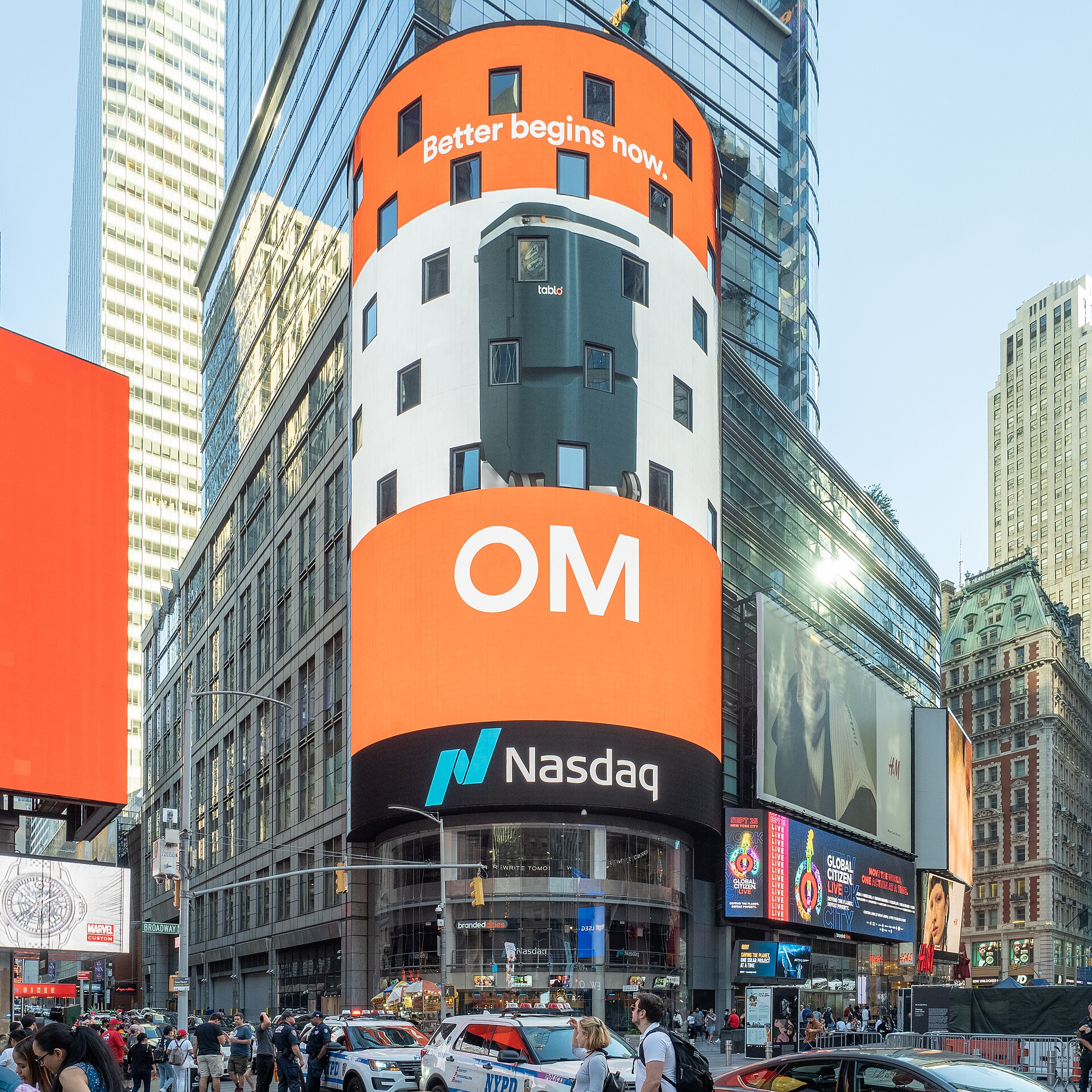
Anthropic raised 81.3 billion dollars in what CNBC describes as the largest offering of all time, pricing its shares at 83 dollars. The stock, ticker ANT, opened at 111.50 dollars on the Nasdaq on Thursday 19 November and reached an intraday high of 115 dollars. The offering was oversubscribed, and roughly half of the institutional investors that placed orders were left empty-handed. [1][4]
The shares then slid for several sessions. On Tuesday 24 November they traded as low as 75.61 dollars before closing at 81.91 dollars, down 6.5% on the day and below the IPO price for the first time. MarketWatch reported that the fall briefly pushed Anthropic’s market value to 999.5 billion dollars, below the 1 trillion mark, compared with a pre-IPO valuation of 965 billion. [2]
Investors who bought at the open had lost more than a quarter of their money in a few days, while those who received shares at the offer price were roughly flat. That distinction is central: an IPO trading below its offer price is a problem for the allocation, but the larger losses usually belong to buyers who paid the first-day premium.
IPO mechanics: the blame game over the opening
Axios, citing the Wall Street Journal, reported a blame game among investors. One criticism was that bankers overshot the opening price, triggering downward momentum. Another was that they exercised the greenshoe option too early, which prevented them from supporting the price as it fell. There had also been pushback before the IPO, with some prospective buyers seeking a lower price range. [3]
The greenshoe, or over-allotment option, normally lets underwriters sell extra shares and then either buy them back in the market if the price weakens, providing support, or exercise an option to buy them from the company if the price holds. Exercising early converts that cushion into new shares, removing a stabilising buyer. Whether that was the decisive factor here cannot be established from the reporting; it is one of several explanations offered.
The episode illustrates a recurring tension. Companies and early holders want the highest possible price; new investors want a margin of safety. When demand is strong enough to leave half of institutional orders unfilled but those same institutions do not buy in the aftermarket, it suggests that much of the order book reflected allocation tactics rather than conviction at higher prices. CNBC notes those firms did not appear to be racing to buy as the stock fell. [1]
A trillion-dollar question about AI valuations
Axios also points to deeper issues: long-standing worries about justifying AI valuations and questions around Nvidia, the chip supplier at the centre of the industry, after its leadership turmoil. CNBC noted that investors had hoped the debut would revitalise an AI trade unsettled by concerns over the feasibility of a multitrillion-dollar infrastructure buildout. [1][3]
A market value near 1 trillion dollars implies very large future profits. When most of a company’s value depends on cash flows years away, small changes in growth assumptions or in the discount rate produce large changes in valuation. This is why AI shares are particularly sensitive to interest rates, financing conditions and news about competitors or suppliers. It is a valuation principle, not a judgement on Anthropic’s prospects.
Analysts quoted by CNBC remained largely positive, citing the company’s potential to capture a large addressable market. The disagreement between that view and the price action is not unusual after a major listing: a new stock lacks a stable shareholder base and trading history, so early prices can swing widely before settling. [1]
Why the gap between private and public prices matters
Before its listing, Anthropic was valued at 965 billion dollars, according to MarketWatch. At the 83 dollar offer price and in early trading, public investors were asked to pay a similar or higher valuation for shares they could sell at any moment. Private valuations are set in negotiated rounds with few buyers, often with protective terms; public prices are set continuously by many investors with different horizons. A fall towards the private valuation is therefore not necessarily a sign that the company has changed, but that a broader market is applying its own discount. [2]
This matters for other large private technology companies considering listings. If the biggest offering on record cannot hold its first-day premium, future issuers and their bankers may price more conservatively, leave more room for a first-day gain or delay listings until conditions improve. Venture investors who mark holdings against public comparables may also revisit their valuations. These are structural incentives that follow from the episode, not forecasts of specific deals.
For employees and early backers, the public price becomes the reference for their wealth and for future share-based pay. A volatile start can complicate retention and the timing of sales once lock-up periods end. The sources reviewed here do not detail Anthropic’s lock-up schedule, so readers should treat future selling pressure as an open question rather than an established fact.
What the options market was saying
Options activity surged as the shares fell. CNBC reported implied volatility of 96, almost 500,000 contracts traded by noon on Tuesday for about 250 million dollars in premium, making it one of the most active single-stock options markets. The largest trade was a 7.5 million dollar purchase of puts at a 75 dollar strike expiring in mid-December, which needed an 11% fall to pay off. [4]
Implied volatility of 96 means the options market was pricing very large potential swings in either direction. Puts outnumbered calls, but CNBC observed that the overall positioning was not overtly bearish, with some bullish activity around the 80 dollar level. In other words, traders were paying heavily for protection and for exposure to large moves, rather than agreeing on direction. [4]
History: broken IPOs are not always broken companies
Axios recalls that Tesla fell below its IPO price after five sessions in 2010 and then rose 67% a year later, while Facebook, now Meta, fell below its offering price in 2012 and left IPO investors underwater for roughly 15 months. SpaceX took 21 trading days to fall below its own offer price this year, according to CNBC, compared with four for Anthropic. [3][4]
These examples show that early trading below the offer price does not determine long-term outcomes in either direction. They also show the opposite risk: being right about a company’s business does not protect a buyer who paid too much at the start. The examples are history, not a guide to what Anthropic shares will do.
The rebound and the wider AI trade
The fall did not last in a straight line. On Friday 27 November, in a broad technology rally that gave the Dow its best week since 2022, Anthropic shares gained nearly 11%, according to CNBC. Chipmakers and data-centre names also rebounded after a steep November sell-off. [5]
This sequence shows that Anthropic is trading as part of a broader AI complex. Its shares fell while Nvidia surged on its chief executive’s reinstatement, then rose with chip stocks. For investors, the lesson is that company-specific news and sector-wide flows can dominate in turn, making it difficult to read any single day’s move as a verdict.
Fonlis records observed market moves around each published story rather than predicting them. The useful questions in the coming weeks are concrete: whether institutional investors build positions as the shareholder base forms, how quickly implied volatility falls and whether the company’s first published results as a listed firm support the valuation implied by its price.
Sources & scope
An explanatory analysis using the dated publications below. Historical figures are not live readings; scenarios are conditional, and market co-movement does not establish causation. Not investment advice.
- 1. CNBC, Anthropic closes below 83 dollar IPO price, but analysts are still largely positive (24 November 2026)
Source for the 81.3 billion dollar raise, 111.50 dollar opening, oversubscription, unfilled institutional orders, the AI infrastructure context and analysts’ views.
- 2. MarketWatch, Anthropic’s stock just broke below its IPO price for the first time (24 November 2026)
Source for the 75.61 dollar low, 81.91 dollar close, 999.5 billion dollar market value and 965 billion dollar pre-IPO valuation.
- 3. Axios, Anthropic shares fall again, close under IPO price (24 November 2026)
Source for the WSJ-reported blame game over the opening price and greenshoe, pre-IPO price pushback, valuation worries and the Tesla and Facebook precedents.
- 4. CNBC, Anthropic shares fall below IPO price. Traders see even more pain (24 November 2026)
Source for the 115 dollar intraday high, options volume, implied volatility, the largest put trade and the SpaceX comparison.
- 5. CNBC, Dow rallies nearly 600 points to close out best week since 2022 (27 November 2026)
Source for Anthropic’s gain of nearly 11% on 27 November within a broad technology rebound.