
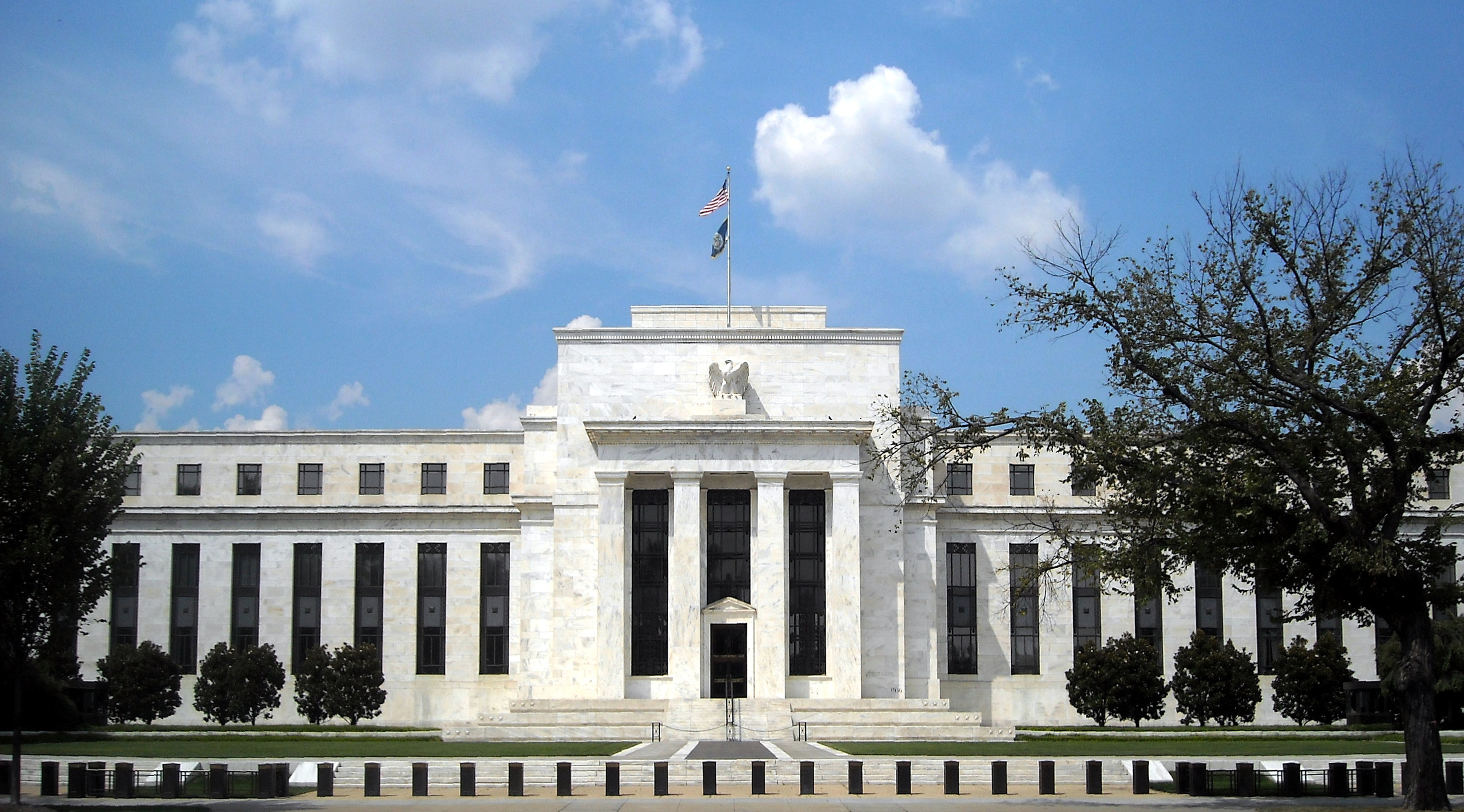



An unchanged rate is not an unchanged outlook
On 28 October, the Federal Reserve maintained its federal-funds target range at 3.75 to 4 percent. A day later, the European Central Bank held its deposit facility rate at 2.50 percent, its main refinancing rate at 2.65 percent and its marginal lending rate at 2.90 percent. Read together, the announcements might look like a synchronised pause. Their explanations reveal something more consequential: two central banks confronting inflation risks through different economic circumstances. [1][2]
The Fed described strong economic activity, resilient domestic spending, robust capital investment and strong productivity growth. It also said inflation remained elevated. The ECB emphasised a worsening energy shock, with higher prices threatening both inflation and growth, while underlying inflation had remained broadly stable so far. The distinction is not between a bank that cares about inflation and one that does not. Both reaffirmed a 2 percent objective. It is between different sources of pressure, and different costs of responding to them. [1][2]
For investors, the important information is therefore not simply that rates stayed still. It is what would make each institution move next. A pause can reflect a need for more evidence, confidence that existing restraint is working, or concern that another increase would impose excessive costs. These releases support a careful comparison of risks, not a definitive prediction of the next decision. Neither the current rate gap nor the shared pause establishes a future path for the dollar, the euro or bond prices.
The Fed’s problem: strength does not settle the inflation question
The US statement describes an economy that has not obviously lost momentum. Job gains had kept pace with the workforce and unemployment had changed little. Domestic spending remained resilient despite geopolitical uncertainty. This matters because persistent demand can allow businesses to pass costs on to customers rather than absorb them in margins. But the statement gives no numerical estimate of excess demand and does not establish that demand alone explains elevated inflation. [1]
Strong productivity complicates the picture in a potentially favourable way. If output per worker rises, an economy can sustain more activity without the same pressure on unit costs. Robust investment can expand capacity as well as stimulate current spending. The Fed mentions both features, but its short release does not quantify their contribution or identify the investment sectors. It would be a mistake to turn those observations into proof that inflation will fade without further restraint. [1]
The voting split makes the remaining uncertainty concrete. The statement was approved by a 10–2 vote; Lisa D. Cook and Beth M. Hammack preferred a quarter-percentage-point increase at this meeting. Their dissent shows that some policymakers judged additional tightening appropriate. It does not show that the majority intends to follow them next time. The decision itself remains a hold, and the Fed explicitly said accumulating more information would help determine the stance needed to return inflation to target. [1]
The ECB’s problem: an energy shock weakens both sides of the trade-off
Europe faces a more explicit supply-shock dilemma. Higher energy costs raise production expenses and reduce the purchasing power of households and importing businesses. A rate increase cannot produce additional fuel or repair an interrupted supply route. It can, however, restrain demand and help prevent an initial price jump from becoming a persistent inflation process. That is why the transmission from energy into wider prices matters more than the energy price alone.
The ECB said the greater magnitude and duration of the shock, together with indirect and second-round effects, were likely to raise inflation and lower growth. Indirect effects include energy costs entering the price of transport and manufactured goods. Second-round effects arise when wages and other prices respond to the initial loss of purchasing power. Crucially, the bank also said wages did not show a material response at this stage. A risk of propagation is not evidence that a wage-price spiral has already taken hold. [2]
Financing conditions had tightened since the previous meeting, according to the ECB, and were likely to weigh on inflation and growth. That means restraint can increase even without a new policy-rate rise. Credit costs, lending standards and market yields all affect spending. The bank committed to a data-dependent, meeting-by-meeting approach and explicitly declined to pre-commit to a rate path. Reading the hold as either an imminent cut or a promised increase would go beyond the published evidence. [2]
For bonds, growth weakness is no longer a complete investment thesis
A conventional slowdown often encourages expectations of lower rates and supports government bonds. An inflationary supply shock can interrupt that relationship. If investors expect persistent inflation, they may require higher yields even as activity weakens. Conversely, if expensive energy substantially suppresses demand without spreading into wages and underlying prices, expected future rates could fall. The same adverse growth news can therefore produce different bond responses depending on its inflation content.
Short-dated government yields are particularly sensitive to expectations for policy rates, while longer maturities also reflect expected inflation, uncertainty, public borrowing and compensation for holding duration. A higher long-term yield is not automatically evidence that traders expect the next central-bank meeting to deliver an increase. Distinguishing the expected rate path from other components is essential before interpreting a curve movement as a monetary-policy signal.
The ECB also confirmed that its APP and PEPP portfolios were declining because principal payments from maturing securities were no longer being reinvested. This does not imply an emergency sale of the portfolios. It does mean the private sector must absorb financing without the same reinvestment support. The bank reiterated that its Transmission Protection Instrument remained available for unwarranted, disorderly dynamics threatening policy transmission. That is a safeguard with a defined purpose, not an unconditional guarantee against sovereign spread widening. [2]
The dollar–euro link is about expectations, not a simple rate subtraction
The Fed’s target range sits above the ECB’s deposit rate, but the two instruments are not identical, and their difference is not a currency forecast. Exchange rates respond to anticipated returns, inflation, growth, risk appetite and capital flows. Markets can already have incorporated a known rate gap. What changes prices is often a revision to the expected future gap or to the risks associated with holding each currency.
If American spending remains resilient while European activity suffers from expensive imported energy, the dollar could receive support through relative growth and return expectations. Yet this is conditional. A US inflation surprise could also weaken confidence in real returns, while a credible improvement in Europe’s energy outlook could support the euro without an immediate ECB move. Safe-haven flows and portfolio repositioning can outweigh interest-rate comparisons over short periods.
For an investor holding foreign bonds or shares, the currency exposure is a separate position unless hedged. Higher nominal yields abroad need not deliver higher returns in the investor’s home currency. Hedging also has a cost influenced by relative money-market conditions. This makes it important to compare like with like: unhedged performance, hedged performance and local-currency performance answer different questions. None of the October statements supplies a verified exchange-rate reaction or a forward currency return.
Equities: examine financing needs and pricing power together
Company earnings sit at the junction of these forces. Businesses able to pass higher input costs on to customers may defend margins, but pricing power can erode if households cut consumption. Energy-intensive producers face a different exposure from asset-light service firms; internationally diversified groups differ from businesses dependent on one domestic market. A broad US-versus-Europe allocation can miss these distinctions within each region.
Financing structure is just as important. A company with long-dated fixed-rate borrowing may feel little immediate impact from current policy rates, while a heavily indebted firm refinancing soon faces a direct earnings constraint. Higher discount rates also reduce the present value of distant cash flows, but that valuation channel is not the same as an operating loss. A business can report improving revenue and still face pressure on its valuation if required returns rise.
Banks are not automatic beneficiaries of rates staying high. Loan income, deposit competition, credit demand and borrower defaults all matter. Likewise, an exporter can benefit from currency depreciation while paying more for imported materials. The useful analytical unit is the balance sheet and business model, not a sector label alone. These mechanisms explain possible exposures; they are not evidence that any named stock moved because of the late-October decisions.
Three conditional paths, not three forecasts
In a favourable adjustment, energy prices ease, underlying inflation stays contained and productivity helps absorb strong demand. Central banks would have more room to respond to growth without compromising price stability. Evidence for this path would include reduced energy pressure, moderating broader price increases and wages consistent with productivity. The immediate policy response would still depend on each bank’s assessment, not on a predetermined calendar.
In a persistent-inflation path, energy pressure spreads into other prices or resilient spending sustains inflation despite existing restraint. Rates could need to remain restrictive for longer, or rise further. Longer-duration assets and businesses dependent on refinancing would be exposed. The Fed’s two dissents illustrate concern about the adequacy of the current stance, while the ECB’s warning identifies a possible propagation channel; neither establishes that this scenario will occur. [1][2]
In a sharper slowdown, expensive energy and tighter financing suppress activity more than expected. Bond investors might anticipate easing, but riskier credit could suffer if weaker cash flows raise default concerns. Government bonds and corporate bonds would not necessarily move together. To distinguish the paths, watch wages, underlying inflation, employment, credit conditions and investment alongside energy prices. A single headline inflation print cannot tell which transmission mechanism is dominating.
What the evidence establishes, and what it does not
As of 4 November 2026, the late-October releases establish unchanged policy rates, a split US vote and contrasting descriptions of economic pressure. They do not provide a common macroeconomic forecast, quantify every inflation mechanism or establish the market reaction to the announcements. This article deliberately uses those two primary releases as its factual foundation and separates their statements from the explanatory market channels developed here. [1][2]
The central insight is that identical decisions can contain different information. In the United States, strong activity makes it harder to infer that inflation is retreating. In the euro area, an energy shock makes weaker growth an unreliable guide to the next rate move. For markets, understanding the source of inflation, the timing of refinancing and the assumptions embedded in expected rates is more useful than treating a pause as a universal buy or sell signal. These are conditional analytical relationships, not investment advice.
Sources & scope
An explanatory analysis using the dated publications below. Historical figures are not live readings; scenarios are conditional, and market co-movement does not establish causation. Not investment advice.
- 1. Federal Reserve, FOMC statement, 28 October 2026
Target range of 3.75–4%; 10–2 vote; Cook and Hammack preferred a 0.25-point increase; economic activity, productivity, investment and inflation assessment.
- 2. ECB, Monetary policy decisions, 29 October 2026
Rates of 2.50%, 2.65% and 2.90%; energy-shock risks, underlying inflation and wages, tighter financing, portfolio runoff and policy-path caveats.