


A shock that changed shape
In the first months of the Iran war, the question for markets was simple: how much crude could leave the Gulf? By the autumn of 2026 that question had partly been answered. According to the International Energy Agency, crude exports from the Gulf surged in September to more than 75 percent of their pre-war level, as producers led by Saudi Arabia used ship-to-ship transfers and routes that bypass the Strait of Hormuz. Global oil supply rose by 2.5 million barrels a day in a single month, to 102.3 million barrels a day.
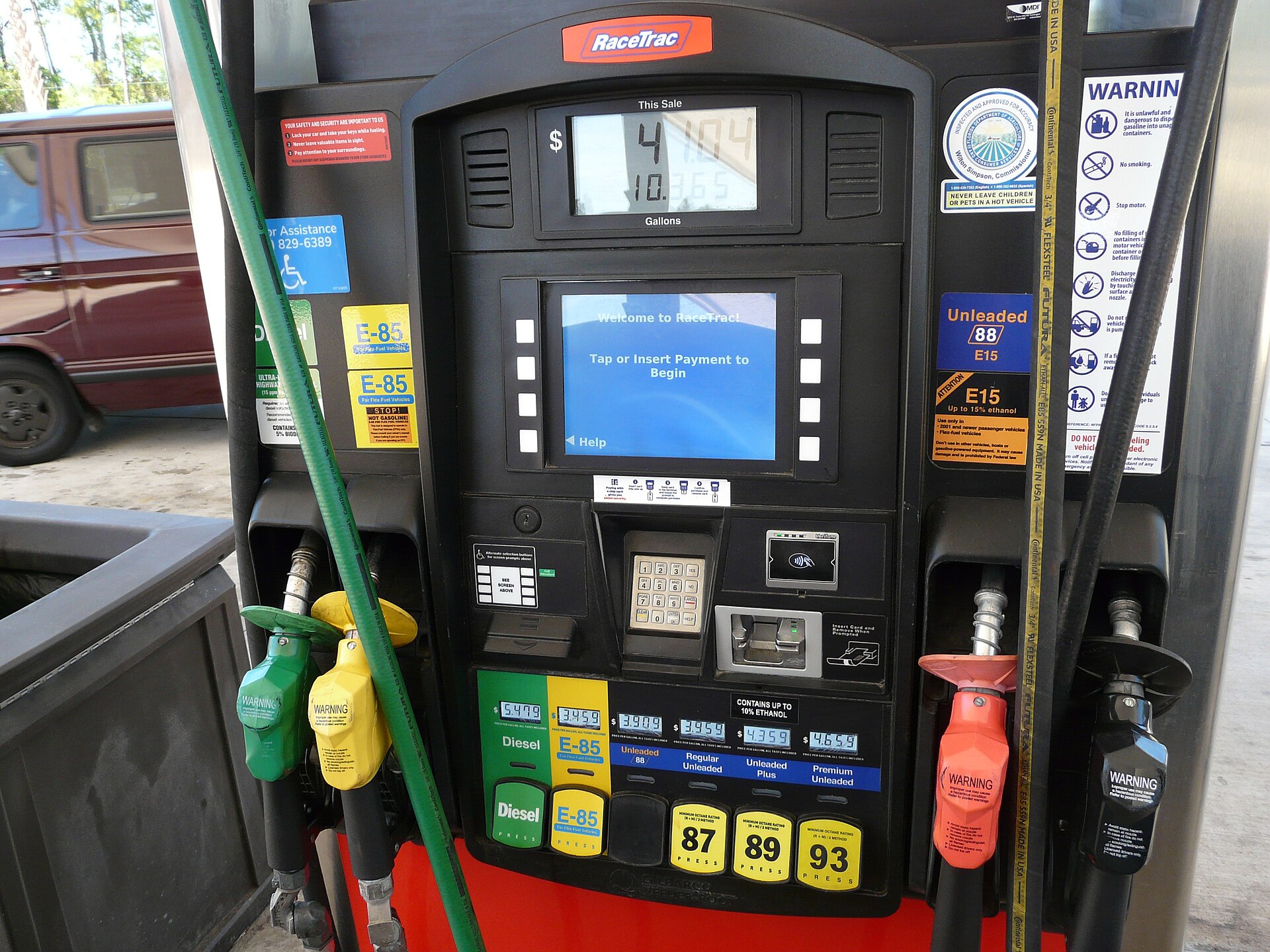
Yet the pressure on consumers did not ease in proportion. The IEA notes that diesel benchmark prices have recently traded close to double their pre-crisis levels, and close to double the price of crude itself, even after easing from the all-time highs reached in September. The energy shock has not disappeared; it has changed shape. The scarce resource is increasingly not the barrel in the ground but the capacity to refine it and the ships needed to move it.
This article explains that shift using the IEA’s October 2026 Oil Market Report and its accompanying commentary, and draws the consequences for inflation, company margins and financial markets. Figures are the agency’s; where the evidence leaves room for several readings, the article says so rather than choosing the most dramatic one.
Demand is already being destroyed
The most striking number in the October report concerns demand, not supply. The IEA forecasts that world oil consumption will fall by 2.6 million barrels a day on average in 2026, and by 2.5 million barrels a day year on year in the fourth quarter. It attributes the decline to the way the war manifests itself through restricted product availability, soaring fuel prices and a deteriorating economic outlook. Diesel alone accounts for a quarter of the drop.
A fall of that size is rare outside a global recession or a pandemic. It means that high prices are doing what economists expect them to do: rationing consumption. Freight operators drive fewer kilometres, industries postpone energy-intensive production, and households cut discretionary travel. The adjustment is efficient in a narrow sense, because it balances a short market, but it is costly, because the lost consumption is in large part lost economic activity.
The recovery the IEA expects is only partial. It projects demand to rebound by about 2 million barrels a day in 2027, which would still leave global oil use 620 thousand barrels a day, or 0.6 percent, below its 2025 level. Some of that gap may prove durable if businesses that switched fuels or reorganised logistics during the crisis do not switch back. The forecast therefore contains both a cyclical story and a possible structural one, and the data do not yet allow the two to be separated.
Why refineries became the choke point
Crude oil is not directly usable by trucks, ships, farms or factories. It must be refined, and refineries are configured for particular crude grades and product yields. The war removed supply of both crude and finished products from the Middle East, and the IEA also records a loss of diesel supply from Russia. Global diesel exports in September were 700 thousand barrels a day lower than a year earlier, because a 1.3 million barrel a day loss from Russia and the Middle East was only partly offset by higher supply elsewhere.
Refining capacity cannot be expanded quickly. The IEA expects global refinery runs to reach a seasonal low of 81.3 million barrels a day in October before rebounding to 84.6 million barrels a day by year-end, with runs for 2026 as a whole down 2.3 million barrels a day. The timing matters: diesel stocks were already being drawn counter-seasonally, ahead of autumn maintenance and peak winter heating demand. When a market enters its season of highest need with depleted inventories, small disruptions can have large price effects.
The economics of refining have also diverged by region. The IEA reports that record freight and crude costs crushed margins in Europe and Asia, while discounted feedstocks propelled United States margins to new highs. The same global shortage is therefore a loss for some refiners and a windfall for others. Location, access to cheaper crude and the ability to export products have become as important as the level of the oil price itself.
The hidden tax of freight
The second bottleneck is transport. Rerouting cargoes away from Hormuz, using ship-to-ship transfers and insuring vessels in a war zone all consume tanker capacity and raise costs. The IEA reports that by mid-October the cost of shipping crude from the Gulf to Asia on a large tanker had reached more than five times its pre-war level, and has published a dedicated commentary on how that surge lifts the price consumers pay.
Freight works like an invisible tax between producer and consumer. A benchmark crude price quoted at the loading port can understate the cost of the delivered barrel by a wide margin when freight and insurance spike. For importers in Asia and Europe, the relevant price is the landed cost, and that cost has risen faster than headline crude benchmarks suggest. This is one reason why consumer fuel prices and inflation can stay high even when crude prices stabilise.
Security risks keep the freight premium elevated. The IEA points to an increase in Iranian attacks on ships transiting the Strait, alongside Houthi attacks on energy infrastructure, which cast considerable uncertainty over the outlook for Gulf exports. The agency describes the supply recovery as fragile. As long as each voyage carries a measurable risk of attack, shipowners and insurers will price it in, regardless of how much crude producers are able to pump.
Emergency stocks and their limits
Governments have responded with the tools they have. In March, IEA members announced a record coordinated release of 400 million barrels from emergency stocks. By late October, about 80 percent of that action had been delivered, according to reporting on remarks by Executive Director Fatih Birol, and more than 20 million barrels of diesel were being prioritised under the existing programme. Birol said the agency was ready to coordinate further releases if member governments asked for them.
Emergency stocks can bridge a temporary gap, but they cannot create refining capacity or tankers, and they are finite. Each release reduces the buffer available for the next disruption, which markets may interpret as a reduction in future security even while it relieves present prices. Birol also said he saw little prospect of energy markets returning to normal in 2027. Policy can smooth the path of the shock; it does not appear able, on current evidence, to end it.
What it means for markets
For inflation, the shift from crude to products is important because diesel feeds directly into the cost of moving goods, growing food and running machinery. The IEA notes that tight diesel markets are raising the cost of goods around the world and weighing on real incomes, economic activity and inflation. Central banks face an uncomfortable combination: a supply shock that pushes prices up while also slowing growth. Their response will differ according to how far the shock spreads into wages and core prices, which the oil data alone cannot tell.
For equities, the divergence in refining margins argues against treating energy as one block. Producers with access to secure export routes, refiners with cheap feedstock and tanker owners may benefit, while airlines, chemicals, road freight and energy-intensive manufacturing face higher costs. Regional exposure matters too: refiners in Europe and Asia have been squeezed while those in the United States have prospered. Investors attributing a share price move to “oil” should identify which part of the chain the company sits in.
For currencies and bonds, the effect runs through the trade balance and inflation expectations. Large fuel importers pay more for each delivered barrel, which can weigh on their currencies and complicate the fight against inflation, while exporters with secure routes collect higher revenues. These links are tendencies, not mechanical rules; capital flows, fiscal support and central bank credibility can all offset them. Co-movement between oil and an asset on a given day does not establish that oil caused the move.
What to watch next
First, the spread between diesel and crude. A narrowing would suggest that refining and transport bottlenecks are easing even if crude stays expensive; a renewed widening as winter approaches would signal that the product squeeze is intensifying. Second, freight rates and security incidents around Hormuz and the Red Sea, which determine whether the recovery in Gulf exports holds.
Third, inventories and policy. The IEA reported that global observed stocks fell in September, with on-land stocks drawing sharply while oil on water surged; a rise in oil on water can reflect longer voyages rather than abundant supply. The pace of remaining emergency releases, and whether governments request a new coordinated action, will show how much buffer is left. Finally, the next monthly reports will show whether the projected 2027 recovery in supply, of 7.7 million barrels a day according to the IEA, remains credible or is revised as attacks continue.
The prudent reading is conditional. If Gulf exports keep recovering and freight costs fall, the product squeeze could ease through 2027, although the IEA itself expects diesel tightness to persist into next year. If attacks escalate, the bottleneck could move back from refineries to the wells themselves. In both cases, the headline crude price is an incomplete measure of the shock: what consumers and companies actually pay is now set further down the chain.
Sources & scope
An explanatory analysis using the dated publications below. Historical figures are not live readings; scenarios are conditional, and market co-movement does not establish causation. Not investment advice.
- IEA, Oil Market Report – October 2026 (14 October 2026)
Demand down 2.6 mb/d in 2026; supply 102.3 mb/d in September; refinery runs, diesel exports and inventories.
- Hydrocarbon Engineering, IEA: the latest developments in oil markets (26 October 2026)
IEA summary: Gulf exports above 75% of pre-war levels, diesel near double pre-crisis prices, tanker costs more than five times pre-war.
- OilMonster, IEA Ready for More Oil Releases as Diesel Crisis Deepens (20 October 2026)
Remarks by Fatih Birol: about 80% of the 400 million barrel release delivered, more than 20 million barrels of diesel prioritised.