
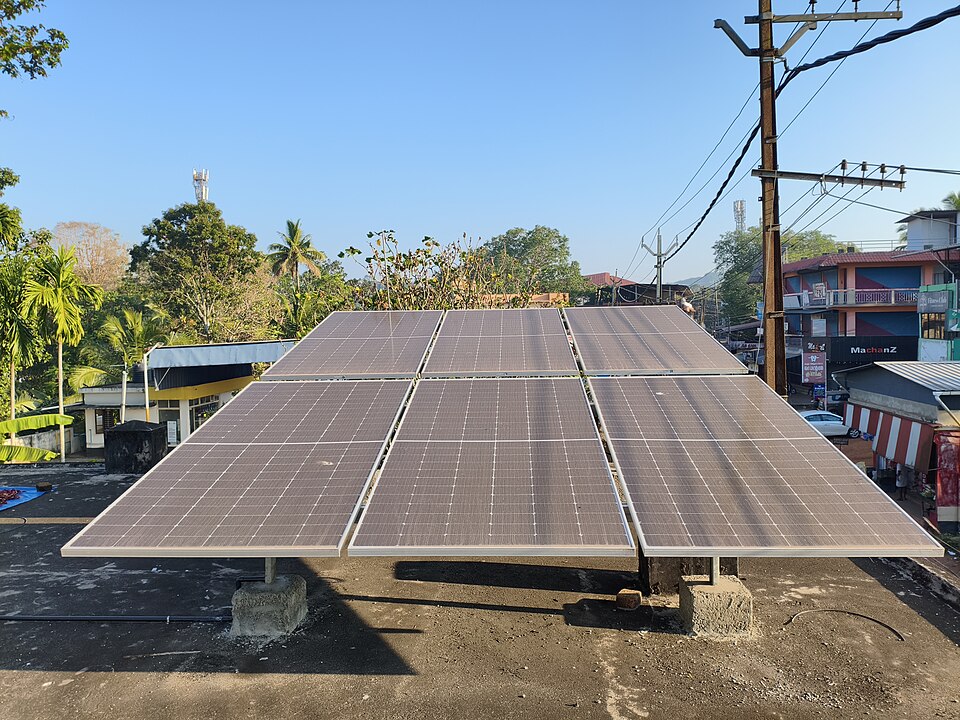



A household-energy pledge, not an order book
A new declaration at COP31 puts household electricity at the centre of the energy-security debate. On 10 November, Australia, Bangladesh, Kenya, Nigeria and Vanuatu endorsed a voluntary plan to increase the number of homes with rooftop solar worldwide from about 150 million to at least 300 million by 2030. Lawmakers from 21 other countries and Indonesia's state-owned electricity company also backed it. Those endorsements are not equivalent to 26 national governments adopting funded programmes. Nor does the global target allocate installations between the five initial signatories or establish a procurement contract for manufacturers. [1]
The timing makes the initiative economically important. Fuel-import disruptions have sharpened interest in domestic electricity production, while households face pressure on everyday spending. Rooftop solar offers one way to reduce exposure to purchased power, but a declaration cannot pay an installation invoice or guarantee a lower monthly bill. The useful market question is therefore not simply how many panels could be sold. It is whether households can finance a functioning system, whether networks can accommodate it, and whether the resulting savings survive the financing and regulatory terms. This is a consumer-finance and electricity-system story as much as a manufacturing story. [1][2]
The saving depends on when electricity is used
A household system produces electricity during daylight, with output varying by weather, orientation and equipment condition. Its financial value depends on what happens to that output. Electricity used immediately can replace purchases at the applicable retail tariff. Surplus exported to the network earns whatever compensation local rules allow, which may differ from the price paid for imported electricity. A household using most power after sunset therefore has a different investment case from one with substantial daytime consumption. Comparing panel prices alone misses this difference between producing energy and avoiding a particular expense.
The net saving must also account for loan repayments, maintenance, installation quality and charges that remain payable even when grid purchases decline. A smaller electricity bill is not necessarily a smaller combined electricity-and-finance payment in the early years. Tenants, apartment residents and households with unsuitable roofs face additional barriers that a global home count does not capture. Consumer protection matters: sales projections should specify the tariff, expected production and treatment of surplus electricity rather than imply universal savings. A well-designed programme can widen access; one dependent on expensive credit or unrealistic production assumptions can transfer technical and financial risks to families least able to absorb them.
Replacing fuel exposure with an upfront financing problem
Solar changes the timing of energy costs. Conventional supply repeatedly purchases fuel, while solar requires substantial expenditure before producing electricity without a recurring fuel input. This can reduce exposure to international fuel-price shocks, but it makes the cost and availability of capital decisive. UN coverage of COP31 identifies high borrowing costs in poorer countries as an obstacle even where clean-energy technology is competitive. A system with an attractive lifetime operating cost can remain inaccessible to a household that cannot obtain affordable financing or provide the required initial deposit. [2]
Loans, leasing and service contracts distribute those costs differently. A lender needs confidence in repayment; an installer needs timely payment; the customer needs enforceable warranties and understandable obligations. Subsidies can reduce the upfront barrier, but their value depends on eligibility, delivery and continuity rather than an announcement alone. Currency creates another mismatch when equipment is imported and debt is denominated abroad while household income is local. Depreciation can raise acquisition or repayment costs without increasing electricity savings proportionately. Investors should distinguish a large potential customer population from customers who can be served profitably with transparent terms and manageable default risk.
A solar roof is not automatically a backup power supply
Storage can shift daytime production toward evening use and increase the share consumed at home. It adds another purchase, however, with its own operating limits, degradation and replacement needs. Whether a battery improves the economics depends on tariff differences, export compensation, consumption patterns and financing. Reliability is a separate consideration: a conventional grid-connected solar installation does not necessarily keep a home powered during an outage. Backup operation requires a compatible design and appropriate protection. Selling every rooftop as energy independence would conflate generation, storage and the ability to operate safely when the surrounding network fails.
Australia illustrates both the progress and the remaining system dependence. AP reports that one in three Australian homes has rooftop solar and more than 700,000 homes have batteries, yet coal still accounts for more than 40% of electricity generation. These are separate indicators, not contradictory ones: household adoption does not describe the full national supply mix or establish how much consumption is covered at every hour. COP31's solar target should likewise be assessed alongside storage and reliable supply rather than treated as proof that fossil generation has already been displaced everywhere. The costs and benefits need to be evaluated at both household and system level. [1]
Distributed generation still needs coordinated networks
Producing power close to consumption can reduce reliance on distant generation, but grid-connected rooftops remain part of a shared network. Local equipment must manage flows that can reverse when many households export simultaneously. Connection rules, voltage management and distribution upgrades influence how much output can be accommodated. At COP31, UNECE's Dario Liguti described around 2,500 gigawatts of power generation and other energy projects awaiting grid connections worldwide. That broad backlog is not a count of residential solar projects and cannot be converted into houses. It nevertheless highlights a general constraint: installed equipment is not the same as usable, deliverable electricity. [2]
Tariff design creates a further distributional problem. Networks retain costs even when some customers buy less electricity. Regulators must decide how those costs are recovered without discouraging useful investment or unfairly shifting charges toward households unable to install panels. Export payments can change as midday generation becomes more abundant, affecting the return on systems built under earlier assumptions. For utilities, rooftop growth may reduce energy sales while increasing the need for distribution investment and flexible services. The result depends on regulation and business structure. A solar expansion is therefore neither an automatic utility earnings collapse nor a guaranteed infrastructure windfall.
More installations do not guarantee better manufacturing margins
The commercial opportunity extends beyond modules to inverters, mounting systems, electrical equipment, batteries, installation, maintenance and consumer financing. Each segment captures value differently. Competitive equipment prices can improve adoption while compressing manufacturer margins. Local installers may benefit from demand but face labour shortages, quality obligations and working-capital needs. A supplier can report rising shipments while cash collection slows or warranty costs increase. The COP31 target is useful context for demand, but it cannot establish which company has defensible pricing power or convert prospective household interest into realised earnings. [1]
Trade and currency policies can also alter landed costs. Imported equipment may provide affordable access while creating exposure to tariffs, exchange rates or delivery disruptions. Local-content requirements can support domestic production but increase costs if capacity or skills are insufficient. Investment analysis should follow actual national rules and customer contracts rather than assign a uniform premium to every solar stock. For financiers, the crucial questions include underwriting, recourse and servicing costs. For equipment suppliers, they include product reliability and competitive intensity. No verified equity or currency move is attributed here to the declaration: the transmission channels are conditional economic mechanisms, not measured market reactions.
Climate finance needs a timetable that investors can use
The rooftop initiative also sits within a wider financing debate. On 11 November, the Guardian reported that several developed economies had not detailed their next climate-finance plans, making recipient-country planning and private investment more difficult. Its reporting describes analysis by NRDC and E3G suggesting progress toward the international finance goal, while emphasising uncertainty around publicly stated commitments. Those projections are not disbursements, and broad climate-finance totals are not a dedicated budget for household panels. A country cannot assume its rooftop programme will receive a particular share merely because an aggregate international objective exists. [3]
Predictability matters because installation businesses, lenders and households commit over different time horizons. A subsidy that stops abruptly can strand inventory or change a customer's financing calculation after preparation costs have been incurred. Development finance can help reduce borrowing barriers, but a supported loan still requires a viable repayment structure and operational delivery. The investment advantage lies in programmes with clear eligibility, durable funding, certified installation and measurable outcomes. Dependable implementation can be more valuable than a larger headline pledge whose funding mechanism remains undefined. This is where geopolitical cooperation becomes an investable framework rather than a conference statement.
What would turn the pledge into durable market demand?
A constructive path would combine affordable customer finance, credible installation standards, suitable network rules and storage where it adds value. A weaker path would produce strong initial orders followed by repayment stress, inconsistent subsidies or falling export compensation. A stressed path would see currency pressure and expensive capital restrict adoption while poor installation quality undermines confidence. These are scenarios, not probability-weighted forecasts. The 2030 target remains an ambition, and the number of homes alone cannot measure system capacity, annual output, household savings or the emissions displaced by different national electricity mixes. [1][2]
The watchlist should therefore include funded national programmes, completed and connected installations, customer financing terms, measured savings and equipment performance. Supplier earnings need separate examination of margins, warranties and cash conversion. Regulators' treatment of network costs and surplus power will shape both adoption and utility returns. COP31's rooftop declaration offers a concrete route from energy-security concerns to household investment, distinct from grand national generation targets. Its promise is real but conditional: cheaper equipment only becomes affordable energy when finance, installation and electricity rules work together. For markets, the strongest signal will be evidence of that implementation, not another increase in the pledged home count.
Sources & scope
An explanatory analysis using the dated publications below. Historical figures are not live readings; scenarios are conditional, and market co-movement does not establish causation. Not investment advice.
- 1. Associated Press via Boston Herald, Nations promise to install more rooftop solar (10 November 2026)
Original AP reporting: five government signatories, approximately 150 million homes and a target of at least 300 million by 2030, non-binding declaration, lawmakers' endorsements, Australian household solar and battery figures, and its coal-generation share. Targets and advocacy remain distinct from completed installations.
- 2. UN News, Energy transition takes centre stage at COP31 (10 November 2026)
Conference reporting on financing barriers and electricity networks. The approximately 2,500 GW connection backlog is attributed to UNECE's Dario Liguti and covers power generation and other energy projects, not residential rooftops alone.
- 3. The Guardian, Developing countries in limbo over climate finance plans (11 November 2026)
Reporting on undisclosed future commitments and NRDC/E3G projections. International climate-finance objectives are not realised transfers or an earmarked solar budget; projected funding is not presented as an observed result.