


An emerging market, not a completed transformation
The IMF’s October 2026 Global Financial Stability Report devotes a chapter to tokenization: representing financial assets and liabilities on distributed, programmable ledgers. Its assessment is neither a dismissal of the technology nor a declaration that traditional markets are obsolete. Tokenization could reduce reconciliation between intermediaries, improve transparency and automate transactions. But the market remains small and fragmented, and the IMF considers its systemic risks limited for now. The important question is whether its foundations are adequate for much broader adoption. [1]
That makes this a current market-infrastructure story rather than a forecast of cryptocurrency prices. A token can represent a bond, a fund interest or an equity-related claim; the investment’s economic exposure does not disappear because its record is digital. The report finds emerging evidence of continuous trading, fractional ownership and information in on-chain equity prices. It also finds that these small markets are less liquid, more volatile and more fragmented than their traditional counterparts. The empirical findings are preliminary and should not be extrapolated into a promise about mature markets. [1]
The first question is what the investor actually owns
An interface can display a familiar company name while giving the buyer something different from a conventional share. The IMF distinguishes native tokens issued as the shares themselves, custodial structures representing a beneficial claim on shares held elsewhere, and synthetic or vehicle-based arrangements providing economic exposure without direct ownership. Dividend treatment, voting rights and claims against intermediaries can consequently differ. A price that tracks a listed security does not establish that the investor has identical rights. [1]
Legal certainty matters most when normal operations fail. Investors need to understand who owes them performance, where an underlying asset is held, which law governs the claim and what happens if the issuer or custodian becomes insolvent. Technology can record an entitlement accurately without resolving a dispute about whether that entitlement is enforceable. For market analysis, the wrapper is therefore part of the risk assessment, not merely a distribution channel added after the underlying investment has been evaluated.
This distinction also limits simple valuation comparisons. A discount to the conventional share could reflect restricted redemption, different rights, counterparty exposure or fragmented liquidity rather than a free arbitrage opportunity. Conversely, a premium might reflect easier access without being sustainable. Before interpreting any price difference, the analyst must establish that the instruments are economically and legally comparable. The IMF identifies legal certainty and regulatory clarity as two central constraints on development. [1]
Faster settlement changes where liquidity is needed
A programmable ledger can coordinate the exchange of a security and its payment. Atomic settlement seeks to make the transaction occur together rather than leave one party exposed after delivering its side. That can reduce some settlement uncertainty. It does not mean participants no longer require cash, collateral or reliable payment instruments. The IMF specifically calls for assessment of the liquidity implications of atomic settlement, collateral reuse and procyclical deleveraging. A safer individual exchange can still create demanding funding conditions across a system. [1]
Netting and settlement timing matter because they determine how much funding must be available and when. A design that settles trades individually can have different liquidity needs from one that offsets obligations before settlement. Immediate execution may require a participant to mobilise resources earlier rather than rely on incoming payments later. Whether this improves overall efficiency depends on the architecture and access to liquidity, not simply on how many seconds a demonstration transaction takes.
The payment asset is equally important. A security settled against a tokenised payment claim inherits the practical limitations and risks of that claim. Access, redemption and reliability under stress deserve scrutiny alongside the security itself. The IMF identifies safe, widely accepted settlement assets as another prerequisite for development. Calling the exchange automated does not answer whether money can move between platforms or whether participants can obtain it when conventional banking channels are unavailable. [1]
An open market is not necessarily a liquid market
Continuous trading is attractive because investors need not wait for an exchange’s next opening to react to news. But the ability to submit an order is different from the ability to transact in size at a reasonable price. Around-the-clock markets can have periods with fewer counterparties, wider spreads and less capacity to absorb orders. The IMF’s observed tokenised equity markets remain small and fragmented; their current volatility and liquidity cannot be treated as a reliable guide to how every future platform will behave. [1]
Connections to conventional markets create another complication. If a token trades while the underlying exchange is closed, price differences may emerge without an immediate opportunity to hedge or redeem through the traditional market. They could convey information, reflect inventory constraints or arise from thin trading. Preliminary evidence that on-chain prices contain information does not prove that they are always the superior price signal. A useful comparison considers trading depth, available hedges and the actual rules for moving between the two instruments. [1]
Fractional ownership lowers the size of an individual purchase, but it does not create underlying liquidity or reduce the issuer’s business risk. Easier access can be valuable without making an investment cheap or safe. For households, the relevant questions remain fees, enforceable rights and exit conditions. For institutional users, they include the ability to execute larger transactions, manage collateral and reconcile obligations across systems. Market accessibility and market resilience are related, but they are not interchangeable.
Scale can solve fragmentation and create new dependencies
The IMF emphasises strong network effects: benefits and risks can both rise as more assets, participants and settlement instruments join the ledgers. A shared system may reduce duplicated processes and make collateral easier to use. But competing, incompatible platforms can instead reproduce fragmentation in a new technical form. Interoperability is therefore one of the report’s four central constraints, alongside legal certainty, regulatory clarity and settlement assets. Greater issuance on isolated networks is not the same as a deeper, integrated market. [1]
Interconnection also changes contagion paths. If tokenised and traditional positions depend on the same collateral, payment infrastructure or intermediaries, stress on one side can affect the other. Reusing collateral can support activity in calm conditions while creating pressure when lenders demand more protection. Automated processes may speed up adjustments without allowing time for discretionary negotiation. These are conditional amplification mechanisms, not evidence that a tokenisation-driven systemic crisis is already occurring. [1][2]
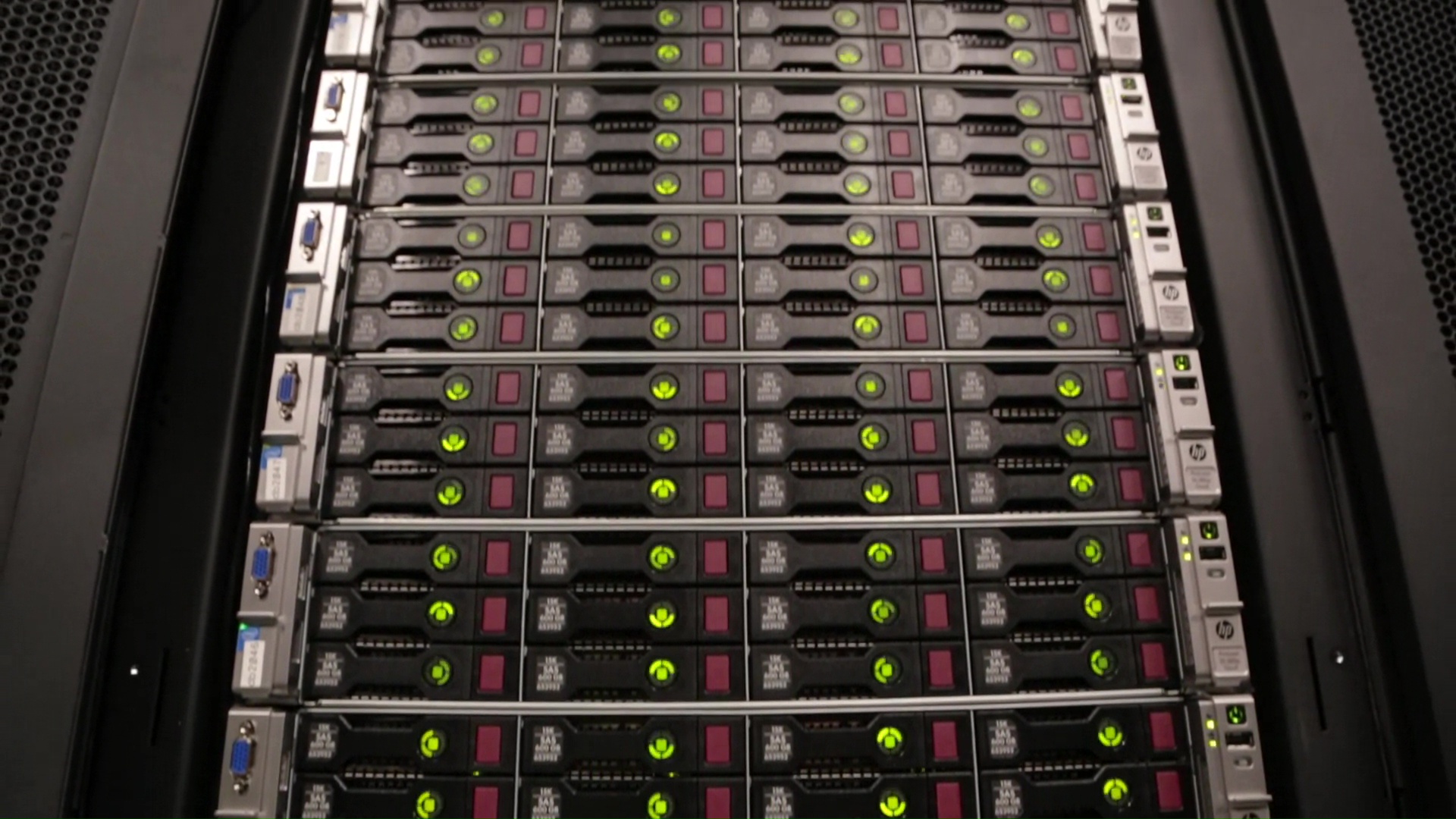
Operational dependencies deserve the same attention as financial ones. Software, governance arrangements and infrastructure can determine whether transactions remain possible during an outage or attack. The server photograph accompanying this article is illustrative and depicts Wikimedia infrastructure, not a financial platform or an incident. Its relevance is the physical and organisational layer behind a supposedly seamless digital experience: financial claims still rely on systems that must be maintained, protected and governed.
Who captures the gains, and who carries the risk?
For banks, exchanges, custodians and technology providers, tokenization may change which services customers need and which fees they will pay. Lower reconciliation costs could improve efficiency, but savings may accrue to clients rather than shareholders if competition compresses margins. New revenue opportunities may require significant investment in compliance and resilient infrastructure. The technology’s adoption is therefore not sufficient evidence of better earnings for every company associated with it; commercial returns depend on the service, costs and competitive structure.
For fixed-income investors, recording a bond on a ledger does not remove credit risk, interest-rate sensitivity or refinancing exposure. It may alter distribution, settlement and collateral usability. Those changes can affect the total cost of holding and trading the instrument, but should be distinguished from the issuer’s capacity to repay. The broader October stability report warns that renewed inflation or fiscal concerns could raise sovereign yields. Tokenised assets remain exposed to those conventional macroeconomic forces as well as to their own infrastructure risks. [2]
What would demonstrate durable progress?
A constructive path would combine enforceable rights, interoperable platforms, reliable settlement money and demonstrably deeper liquidity. A less successful path would multiply products while leaving investors dependent on thin markets and unclear claims. A stress scenario would test whether collateral demands, infrastructure failures or interrupted redemption transmit between digital and conventional finance. These are analytical scenarios, not assigned probabilities or predictions of a particular platform’s failure.
The useful watchpoints are concrete: legal documentation, actual spreads and market depth, redemption performance, funding requirements, outage handling and disclosed links to intermediaries. The IMF recommends technology-neutral regulation based on the same activity and risk receiving the same regulatory outcome, together with circuit breakers and liquidity safeguards. The central test is not whether markets can run continuously, but whether they can continue to function credibly when investors want cash at the same time. Faster infrastructure is valuable only if the rights and risk controls behind it can keep up. [1]
Sources & scope
An explanatory analysis using the dated publications below. Historical figures are not live readings; scenarios are conditional, and market co-movement does not establish causation. Not investment advice.
- [1] IMF, Global Financial Stability Report, October 2026: Chapter 3
Scaling Tokenization: New Efficiencies, New Vulnerabilities. Primary source for rights, settlement, market evidence and policy safeguards; findings are preliminary and systemic risks currently limited.
- [2] IMF, Global Financial Stability Report, October 2026: Executive summary
Broader macro-financial context and tokenization amplification channels. This is part of the same report, not independent corroboration or live market data.