




A licensing system, not a ban
On 4 April 2025, China’s Ministry of Commerce imposed export restrictions on seven of the seventeen rare earth elements: samarium, gadolinium, terbium, dysprosium, lutetium, scandium and yttrium, together with magnets made from them. The measure was presented as a response to United States tariff increases, and it did not prohibit exports outright. It required companies to obtain special licences before shipping these materials abroad. At the same time, sixteen American entities were placed on an export control list limiting their access to dual-use goods; all but one operate in defence and aerospace.
The distinction between a ban and a licensing regime matters for how the instrument works. A ban creates a shortage and then, usually, workarounds. A licensing system creates discretion. Every shipment becomes a decision, every customer a file, and the timing of approvals becomes a policy variable in itself. The Centre for Strategic and International Studies, in an April 2025 assessment, noted that the affected elements sit at the heart of defence, energy and automotive supply chains, precisely the sectors where a few weeks of administrative delay can halt a production line.
The controls have since evolved. They are currently suspended, but market participants are focused on 10 November 2026, when they are due to be reintroduced unless the suspension is extended or the measures are withdrawn. Under China’s Announcement No. 61, licensing requirements can extend beyond China’s borders: they can apply to foreign-made products containing specified Chinese-origin rare earth materials above certain thresholds, and to products manufactured using covered Chinese rare earth technologies. That extraterritorial reach is what turns a national export policy into a global compliance problem.
How concentrated the supply chain really is
The reason a licensing system in one country can move prices worldwide is the concentration of the middle of the supply chain. Mining rare earth ore is not the bottleneck; deposits exist on several continents. The bottleneck is separation and processing, the chemically intensive stage that turns mixed ore into individual oxides and metals. According to the commodity research firm CRU, China accounts for 99% of global heavy rare earth separation capacity and 88% of light rare earth separation capacity. The Federation of American Scientists, reviewing the United States response, puts China’s share of all rare earth processing at 91%.
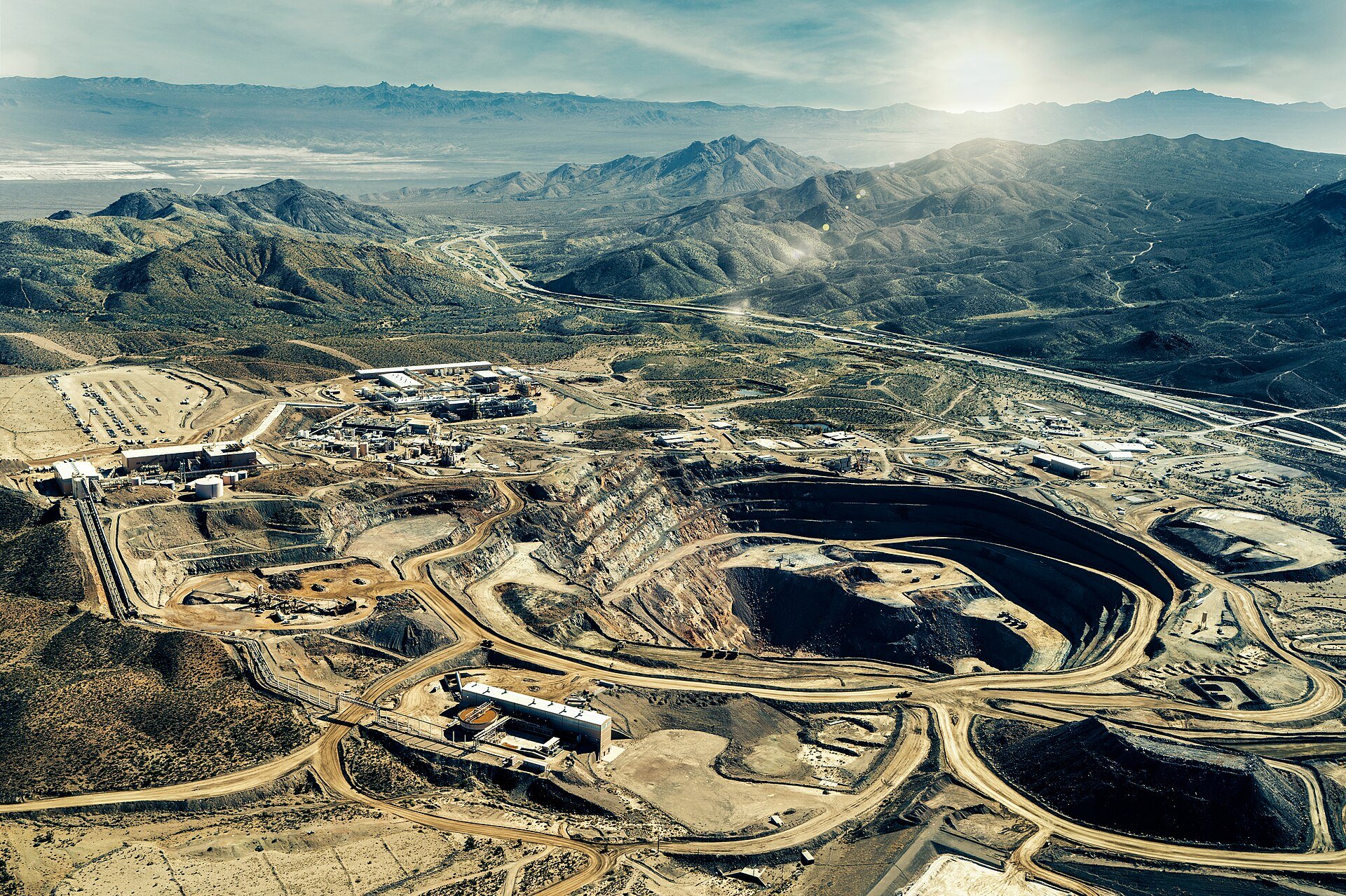
This concentration was built over decades and reflects economics as much as geology. Separation plants are capital-intensive, environmentally demanding and technically unforgiving; Western producers progressively exited the business as Chinese capacity undercut them on cost. The result is an asymmetric interdependence. China imports ore and concentrate, including from the United States’ only operating rare earth mine, Mountain Pass in California, whose output long went to China for processing. The dependence runs through the processing stage in both directions, but the leverage sits where the processing capacity is.
Heavy rare earths such as dysprosium and terbium illustrate the extreme end. They are used in small quantities to keep permanent magnets working at high temperatures, which makes them almost irreplaceable in electric vehicle motors, wind turbine generators and guided weapons. There is no meaningful spot market, no large stockpile outside China and no substitute that engineers can qualify quickly. When 99% of separation capacity for these elements sits in one jurisdiction, an export licence is not a formality; it is the market.
What the controls did to prices and trade
The trade data show how quickly licensing bites. CRU reports that exports of dysprosium and terbium from China were 83% lower in January 2026 than in January 2025. Because the restrictions target supply rather than demand, the immediate effect outside China was a price divergence: material available inside China continued to trade near domestic benchmarks, while material delivered to Rotterdam and other Western hubs repriced sharply higher.
The scale of that divergence is unusually stark for an industrial input. CRU forecasts that yttrium prices delivered EXW Rotterdam will reach 78 times the Chinese domestic price in 2026. A multiple of that size is not a normal premium; it indicates two segmented markets for the same element, separated by an export licence rather than by transport costs. For manufacturers outside China, the relevant price of a heavy rare earth is no longer a global benchmark but the clearing price of a licensed trickle.
Such a wedge changes behaviour in ways that aggregate statistics understate. Buyers over-order to build buffers, which amplifies scarcity. Producers redesign products to economise on the restricted elements, which takes years. Traders arbitrage the gap where licences allow, which keeps some flow alive but at a rent. And governments, faced with private supply chains that cannot clear, enter the market directly. That last response is the most consequential, and the United States has provided its clearest example.
Washington’s answer: the MP Materials blueprint
On 10 July 2025, the United States Department of Defense announced a multibillion-dollar partnership with MP Materials, the owner of Mountain Pass and the country’s only active producer of neodymium-praseodymium, the light rare earth blend used in high-strength magnets. The structure, detailed in an analysis by the Federation of American Scientists, combines four instruments. The Pentagon invested $400 million in preferred stock. A ten-year warrant allows it to raise its stake to 15%, which would make it the company’s largest shareholder. A $150 million loan expands processing capacity, alongside a separate $1 billion loan from JPMorgan and Goldman Sachs to build a magnet plant described as ten times current scale.
The most novel element is on the demand side: a price floor. Starting in the fourth quarter of 2025, the Defense Department guarantees MP Materials $110 per kilogram for NdPr over ten years, roughly double the market price at the time of the deal, through a structure resembling a contract for difference. When the market price falls below the floor, the government pays the difference; when it rises above, the arrangement can return value to the state. The floor is designed to solve the specific problem that destroyed previous Western rare earth ventures: the certainty that cheap Chinese supply would eventually undercut any new entrant.
The blueprint matters beyond one company because it redefines the policy toolkit. Rather than tariffs, which raise costs for domestic manufacturers, or subsidies, which expire, the state is combining equity, warrants, loans and a decade-long price guarantee to create a bankable market where none existed. Whether that model can be replicated for heavy rare earths, where the processing gap is far wider and the volumes far smaller, is the open question. A floor price can finance a plant; it cannot conjure solvent extraction expertise that took China forty years to accumulate.
What central bank models say about the cost
The European Central Bank has examined what a serious rare earth disruption would mean for the wider economy. In Occasional Paper No. 384, ECB economists model a hypothetical scenario of a partial Chinese export ban and trace its propagation through three lenses: the criticality of rare earth inputs in production networks, the output and inflation response in a macroeconomic model, and the amplification that occurs through global value chains linking many countries and sectors.
The paper’s value is less in any single number than in the transmission logic it makes explicit. Rare earths are a tiny share of direct production costs, which tempts the conclusion that they cannot matter much macroeconomically. The modelling shows why that intuition fails: when an input has no short-run substitute and sits upstream of sectors such as automotive, electronics, defence and renewable energy, a small missing component can idle a large amount of downstream output. The loss is set by the least available essential input, not by the average input.
Two implications follow for policy. First, the cost of dependence is nonlinear: it is modest in normal times and very large in a disruption, which is precisely why private supply chains underinvest in resilience and why governments are now paying floor prices to change that calculus. Second, escalation risk cuts both ways. The ECB paper considers scenarios beyond rare earths, in which export controls spread to other critical inputs. The model-based message is that the economic damage of weaponised interdependence grows faster than the number of restricted products.
What the November deadline could change for markets
The 10 November 2026 date concentrates several uncertainties in one place. If the suspension lapses, licensing requirements return, and under Announcement No. 61 they can reach foreign-made products containing Chinese-origin rare earths above specified thresholds or made with covered Chinese technology. Fastmarkets reports that companies across the supply chain are already treating the date as a planning horizon, while alternative refining and recycling projects accelerate but continue to face equipment, expertise and feedstock constraints.
For markets, the scenarios differ in kind, not just degree. An extension of the suspension would likely compress the ex-China price premium gradually, as inventories built during the scare are worked off; the structural dependence would remain, but the urgency premium would fade. A reinstatement of controls would re-widen the divergence measured by CRU, reward producers with licensed supply and penalise manufacturers who treated the truce as permanent. A broader application of extraterritorial licensing would move the shock from commodity markets into finished goods, forcing automakers, electronics firms and defence contractors to certify the rare earth content of their products.
Equity and credit markets have already begun pricing the policy response rather than the commodity itself: the value of non-Chinese producers increasingly reflects government backstops such as the MP Materials floor, not spot oxide prices. That creates its own fragility. If political priorities rotate, the floor-price model transfers risk to taxpayers; if controls persist, the same model looks prescient. The November deadline is therefore less a single event than a forcing date on which several repricings, in commodities, equities and industrial policy, become visible at once.
Scenarios, limits and what to watch
Three scenarios bracket the outlook. In the first, the suspension is extended and licensing stays dormant: prices outside China drift towards Chinese benchmarks, buffer stocks are drawn down, and diversification projects lose urgency, leaving the concentration measured by CRU essentially intact. In the second, controls return in their April 2025 form: heavy rare earth exports fall sharply again, the Rotterdam premium reopens, and governments extend the MP Materials template to more producers and elements. In the third, Announcement No. 61 is applied extraterritorially with force: compliance costs spread through manufacturing supply chains, and the contest shifts from tonnes of oxide to control over processing technology.
The analysis here has limits that should be stated plainly. Chinese licensing decisions are opaque, and public export statistics lag and can be revised. The price multiples cited for 2026 are forecasts from a single research house, however reputable. The macroeconomic scenarios are model-based, and models of supply shocks depend heavily on assumptions about substitution that history may not respect. Nothing in the dated sources establishes what Beijing or Washington will actually decide in November.
A short list of observable signals can discipline expectations: monthly Chinese export volumes for dysprosium, terbium and yttrium; the spread between Chinese domestic and Rotterdam prices; official statements on extending or withdrawing the suspension; the commissioning pace of non-Chinese separation capacity; and whether additional governments adopt price-floor contracts on the MP Materials model. The structural conclusion is more robust than any scenario: when one jurisdiction holds roughly nine-tenths of processing capacity for inputs without short-run substitutes, the price of dependence is paid either as a premium in quiet times or as a disruption in tense ones. This is analysis, not investment advice.
Sources & scope
An explanatory analysis using the dated publications below. Historical figures are not live readings; scenarios are conditional, and market co-movement does not establish causation. Not investment advice.
- CSIS, Consequences of China’s New Rare Earths Export Restrictions (April 2025)
April 2025 controls on 7 of 17 rare earth elements (samarium, gadolinium, terbium, dysprosium, lutetium, scandium, yttrium) and magnets; 16 US entities listed, all but one in defence and aerospace.
- Federation of American Scientists, Unpacking the DoD-MP Partnership (July 2025)
Deal structure: $400 million preferred equity, warrant to 15%, $150 million DoD loan, $1 billion bank loan, ten-year $110/kg NdPr price floor; China processes 91% of rare earths globally.
- CRU, Why are rare earth prices rising outside China? (October 2026)
China holds 99% of heavy and 88% of light rare earth separation capacity; dysprosium and terbium exports 83% lower in January 2026 than January 2025; yttrium EXW Rotterdam forecast at 78 times the Chinese price in 2026.
- Fastmarkets, China’s looming November export controls (2026)
10 November 2026 reintroduction date absent an extension; Announcement No. 61 licensing for foreign-made products with Chinese-origin content or technology; recycling and refining projects face equipment, expertise and feedstock constraints.
- European Central Bank, Occasional Paper No. 384: Global implications of export controls on rare earths
Model-based assessment: criticality of rare earth inputs, output and inflation impacts of a partial export ban, and propagation through global value chains.