



The scarce asset may be a connection, not a power plant
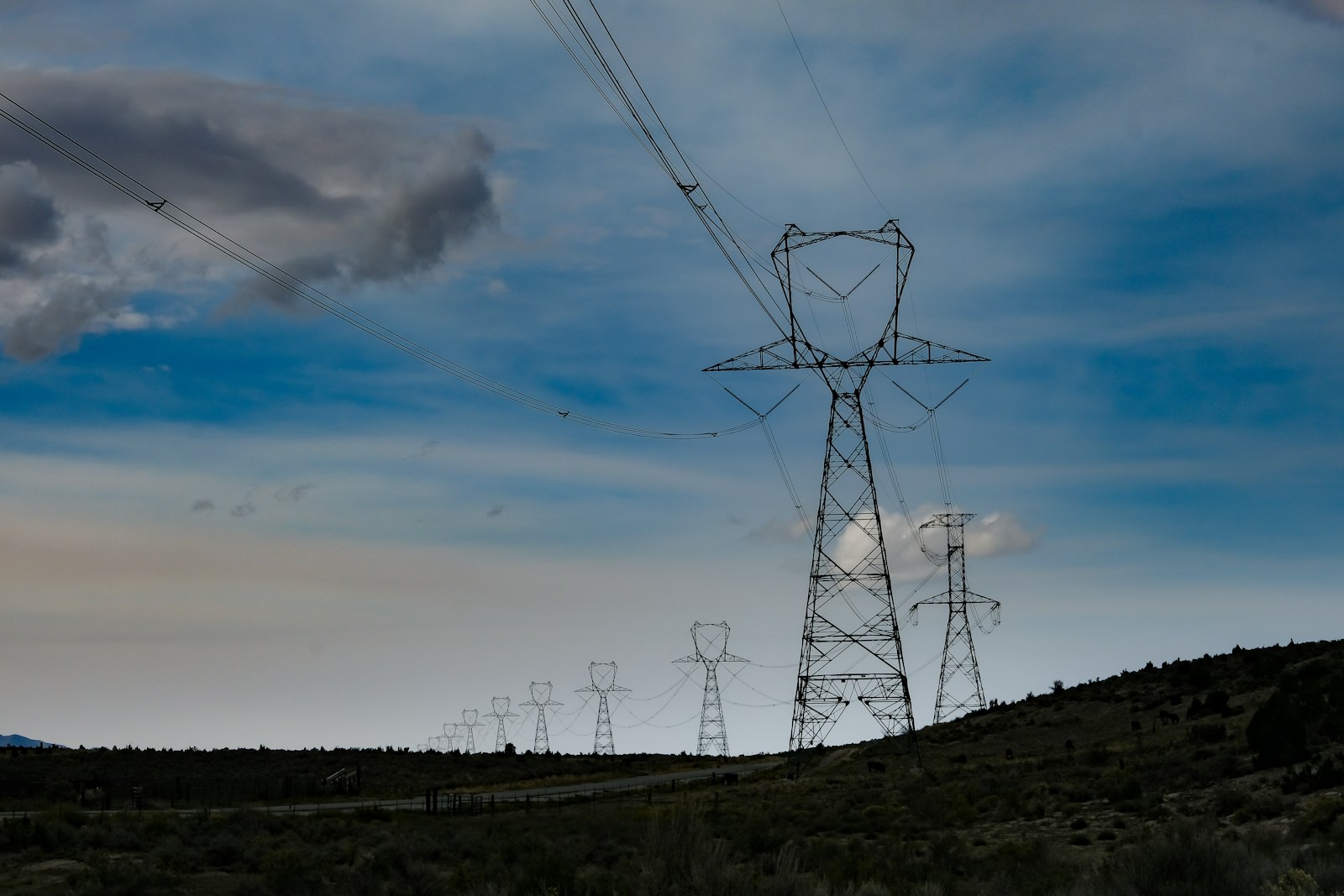
A data centre can have financing, land and computing equipment and still be unable to open at the intended scale. A factory can secure an electricity contract and still lack a network capable of delivering that power at its chosen site. These are not contradictions. Electricity is a service provided through an interconnected physical system, not a commodity that can always be moved from any seller to any buyer. Generation produces energy; transmission carries it over long distances; distribution delivers it locally. A constraint in any one of those stages can stop an investment that looks viable when considered in isolation.
That distinction changes the economic question. The issue is not only whether a country has enough annual electricity production, but whether the right location can receive dependable power when it is needed. A national surplus can coexist with local congestion. New renewable capacity can coexist with delays in connecting it. More ambitious industrial policy can coexist with a network that cannot accommodate its projects. The central argument of this article is that connection capacity and the time required to expand it can become decisive constraints on growth. Its evidence comes from dated IEA and European Commission publications, not from an assertion about live grid conditions in October 2026.
AI adds a concentrated load to a much wider transition
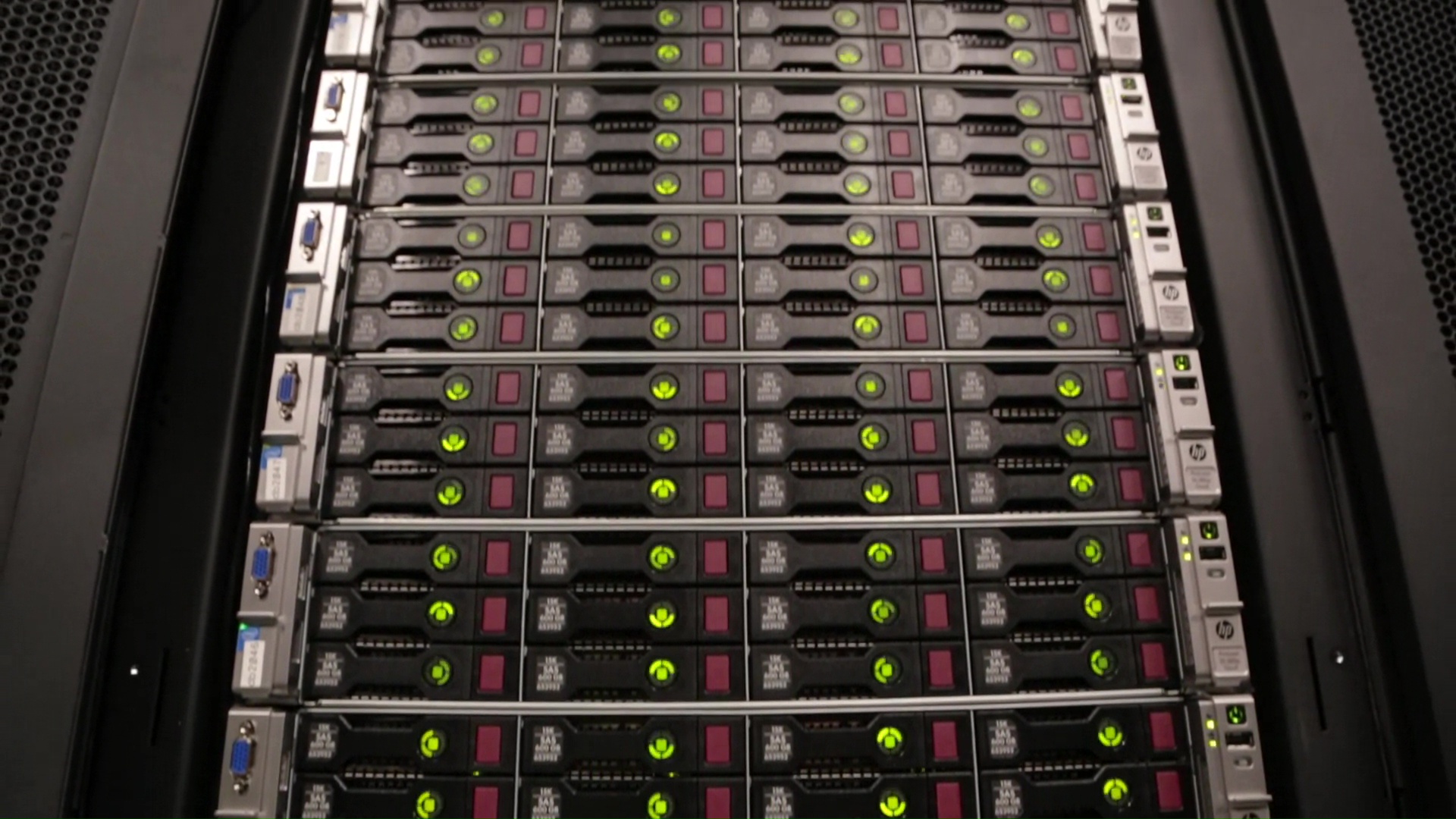
The IEA's Energy and AI report, published in April 2025, estimated that data centres consumed about 415 terawatt-hours of electricity worldwide in 2024, roughly 1.5% of global consumption. Its central projection put that demand at around 945 terawatt-hours in 2030. The first number is an estimate for a completed year; the second is a projection dependent on computing demand, equipment efficiency and the pace of deployment. Neither should be treated as a current meter reading. The figures cover data centres as a whole, including digital services beyond artificial intelligence. Calling all of that consumption AI demand would overstate what the evidence establishes.
The relatively modest global share can nevertheless conceal a substantial local problem. Large computing facilities concentrate demand in particular areas, whereas a global percentage spreads it across the entire world. A new load can therefore overwhelm spare capacity in one district without creating a worldwide energy shortage. Electric vehicles, heat pumps and industrial electrification add different patterns of demand, and existing networks must serve them too. The relevant stress depends on peak load, location, reliability requirements and timing, not just annual consumption. The IEA's projection is a reason to examine local delivery systems carefully, not a justification for assuming an inevitable global power crisis.
Why adding generation does not automatically unlock growth
A network has limits set by cables, transformers, substations, operating rules and the need to remain stable when equipment fails. Adding a power plant does not necessarily increase the capacity of the line connecting a distant industrial zone. Increasing a line's capacity does not necessarily solve a bottleneck in a local substation. Electricity systems also need to balance supply and consumption continuously. A portfolio that produces sufficient energy over a year may still require storage, flexible demand, dispatchable generation or interconnection to meet particular hours reliably. Annual energy adequacy and dependable delivery are different tests.
The IEA's 2023 grid assessment estimated that meeting national energy and climate goals would require adding or refurbishing more than 80 million kilometres of grids by 2040, approximately the length of the existing global network. This is a conditional infrastructure requirement, including refurbishment, not a claim that the world must build that much entirely new transmission. The same assessment called for annual grid investment to nearly double to over $600 billion by 2030. These estimates illustrate the scale of the coordination problem. They do not establish that the investment has occurred, that every country faces the same shortage, or that spending alone guarantees useful capacity.
Connection time becomes an input into industrial competitiveness
A delayed connection has an economic cost before a single unit of electricity is consumed. Capital may be committed to a site that cannot generate revenue, equipment may need storage, and financing arrangements may have to be extended. A business deciding between locations must therefore compare expected connection dates as well as tariffs, labour and taxes. A cheap power offer with an uncertain delivery timetable may be less attractive than a more expensive but credible connection. This is an analytical mechanism, not evidence that electricity alone determines where factories or data centres are built. Customers, skills, communications networks and regulation also constrain location.
Timing is difficult because the supplier and customer face different risks. Network operators need confidence that the promised load will materialise before building expensive assets. Developers need confidence in the connection before committing to their facilities. If speculative applications are mistaken for firm demand, infrastructure may be oversized; if operators wait for certainty, viable projects may be delayed. Better information, clear milestones and credible commitments can reduce that coordination failure. The European Commission's November 2023 Grid Action Plan addressed planning, permitting, financing and connections together, recognising that investment is a sequence of decisions rather than a single construction announcement.
Who pays for capacity that serves the next industrial wave?
Electricity networks are often regulated monopolies because duplicating wires for competing providers would be costly. Their operators commonly recover approved expenditure through network charges under jurisdiction-specific rules. That creates a distributional question when a very large new customer requires substantial reinforcement: should the customer pay directly, should the cost be spread across other users, or should public funds contribute? There is no universal answer. A dedicated connection used by one facility is different from an upgrade that improves reliability and unlocks capacity for a wider region. The allocation depends on the benefits, rules and commercial commitments involved.
In its 2023 action plan, the Commission estimated that approximately EUR 584 billion in investment would be needed for EU electricity grids during the decade. It also reported that 40% of EU distribution grids were more than 40 years old. These are dated European estimates, not global statistics or an October 2026 spending total. Replacing ageing assets and accommodating new loads can support reliability, but the bill does not disappear. If costs enter regulated tariffs, consumers may face higher network charges even while cheaper generation lowers wholesale prices. Wholesale energy, network charges, taxes and retail bills must be analysed separately; improvement in one does not guarantee an immediate fall in the final bill.
An investment programme is not yet delivered infrastructure
Grid expansion depends on specialised equipment, engineering capacity, land access and permits. Transformers and cables must suit the system's specifications, while substations and new routes require construction and coordination with existing operations. These dependencies mean that a larger budget need not translate immediately into a larger functioning network. The IEA's grid work identifies supply-chain constraints and long delivery timelines as important execution risks. A political target, an approved plan, an equipment order and an energised connection represent four different stages. Treating them as interchangeable exaggerates the capacity that is actually available to businesses.
For equipment manufacturers, an expanding order book may offer revenue visibility, but it is not the same as profit or cash received. Fixed-price contracts can expose suppliers to input inflation. Capacity expansion requires investment, and customers can reschedule orders if projects are delayed. For network operators, construction overruns can raise financing needs and complicate recovery of costs. The market opportunity is therefore uneven: a supplier with disciplined contracts and available capacity may have a different exposure from one confronting execution problems. The relevant evidence is company-specific delivery, margin, cash-flow and order data, not merely membership of an infrastructure-themed share index.
More spending does not automatically mean higher utility returns
A regulated utility may earn an allowed return on an approved asset base, but the details matter. Investment can require financing years before the related revenues are fully available. Whether construction expenditure earns a return, when the regulator updates tariffs, and how inflation or cost overruns are treated differ across systems. A company can expand its assets and still experience cash-flow pressure. Interest costs, dividend commitments and the need for new equity influence how much of the investment programme ultimately benefits existing shareholders. Grid demand alone is not sufficient evidence for a claim that every utility will prosper.
Higher financing costs can make that timing gap more difficult, especially when debt matures during a heavy construction phase. Yet an observed movement in a utility bond cannot be attributed to grid investment without checking broader rates, credit spreads and the issuer's finances. A fall in government yields may help refinancing while a deterioration in credit quality offsets that benefit. Equipment firms, regulated networks and electricity generators also have different business models. They should not be treated as one beneficiary group. A disciplined market assessment follows approved expenditure, regulatory decisions, debt maturities and realised cash flows before translating an infrastructure need into an earnings or credit thesis.
Resilience requires more than building additional wires
New lines and substations are essential in some locations, but better use of existing networks can also matter. Demand that can shift away from constrained hours, storage, better operational visibility and technologies that increase usable line capacity may ease specific bottlenecks. None is a universal substitute. A battery needs energy to charge and has a finite duration; flexible demand is only useful when the customer can genuinely change its operations. Some computing tasks can be scheduled, while services with strict availability requirements may be less flexible. The right comparison is the service delivered under local constraints, not an abstract contest between hardware solutions.
The geopolitical dimension follows from those practical choices. A country seeking to attract digital and industrial investment needs more than a subsidy or access to advanced processors: it needs a credible power system and the ability to build and maintain it. Dependence on imported equipment, fuel or technical expertise can shift vulnerability rather than remove it. Domestic generation can improve security while the equipment needed to connect it remains internationally sourced. Reliability, resilience to extreme weather and public acceptance also affect whether a project succeeds. Energy security and competitiveness overlap here, but pursuing either through poorly planned construction can create costly assets without delivering the promised capability.
Three scenarios, and the evidence that would distinguish them
In the first scenario, demand grows broadly as anticipated and network delivery keeps pace. Connections become operational, new assets are used, and approved revenues support financing. Evidence would include completed milestones, credible contracted loads and improving operational capacity, not just rising capital-spending forecasts. In a second scenario, demand arrives faster than connections. Delays, congestion and additional costs could constrain developers or electricity-intensive businesses, while available sites become more valuable. That interpretation would require location-specific evidence about delivery dates, power availability and contracts; a national electricity price or a broad technology index would be a weak substitute.
In a third scenario, infrastructure is committed but demand disappoints, relocates or becomes less energy-intensive than assumed. Underused assets could create disputes over who should bear costs, while suppliers face weaker future orders. This is not a forecast of an AI collapse: it is the downside counterpart of planning around uncertain demand. Across all three cases, separate physical observations from market interpretations and use dated evidence. Utilities, equipment suppliers, industrial customers and technology firms may respond differently to the same development. The strongest conclusion is not that grids are the next guaranteed investment winner, but that dependable connection capacity is becoming a strategic input whose value depends on location, execution, regulation and actual use.
Sources & scope
An explanatory analysis using the dated publications below. Historical figures are not live readings; scenarios are conditional, and market co-movement does not establish causation. Not investment advice.
- IEA, Energy and AI: executive summary (April 2025)
Estimated 2024 data-centre electricity consumption of 415 TWh and projected 2030 consumption of about 945 TWh; global shares do not measure local network stress.
- IEA, Energy demand from AI (2025)
Scope of data-centre demand, geographical concentration, equipment efficiency and uncertainty in future consumption.
- IEA, Electricity Grids and Secure Energy Transitions: executive summary (October 2023)
Conditional requirement for over 80 million kilometres of new or refurbished grids by 2040 and annual investment exceeding $600 billion by 2030; neither is realised spending.
- IEA, Electricity Grids and Secure Energy Transitions (2023)
Network planning, investment, equipment constraints, operational flexibility and the distinction between generation and deliverable electricity.
- European Commission, EU Grid Action Plan announcement (28 November 2023)
Dated estimate of EUR 584 billion in grid investment needs and distribution-network age; European scope, not a current global spending total. Financing and market scenarios above are conditional analysis, not reported price movements.