

A reinstatement that moved an entire market
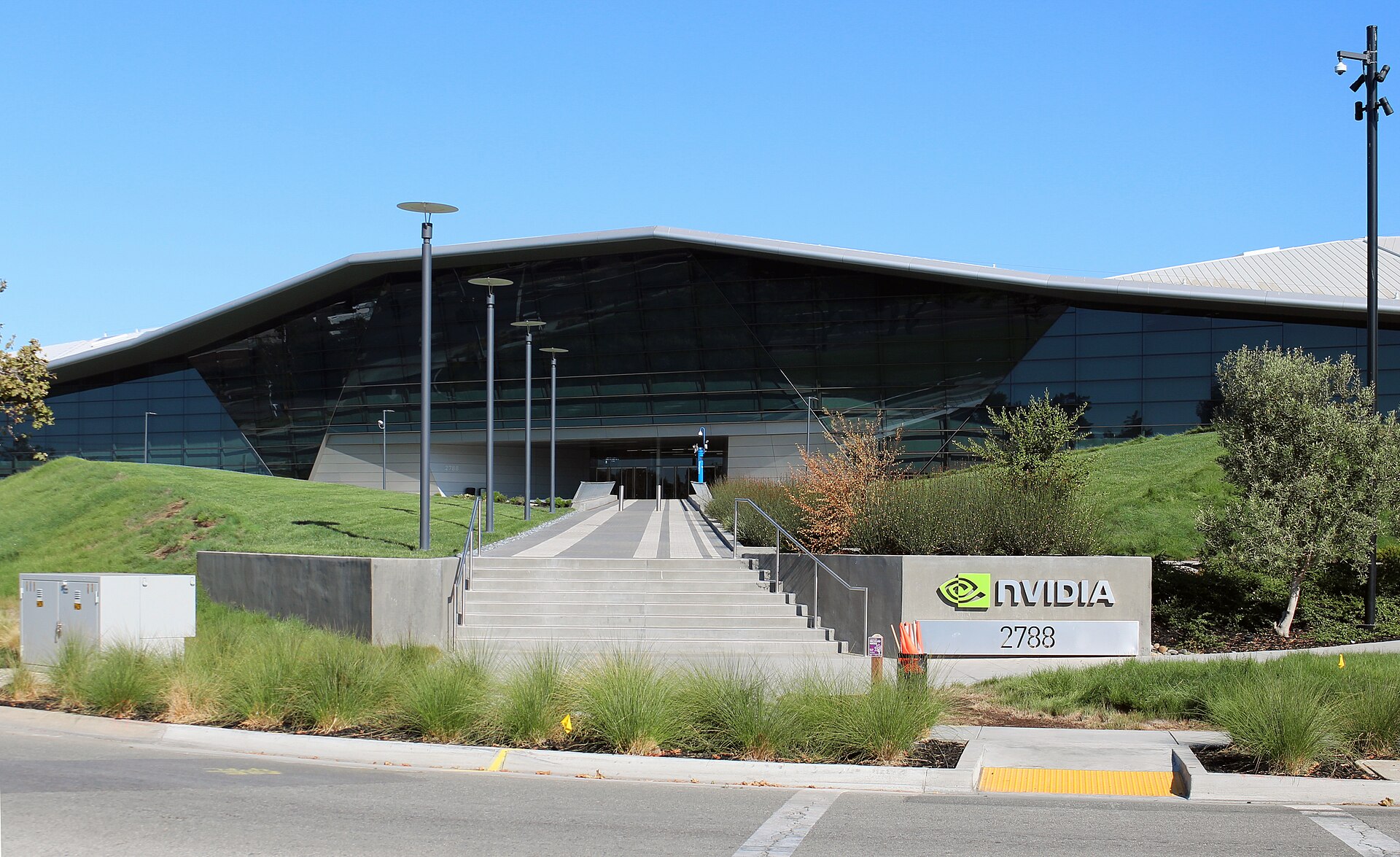
On Monday 23 November, Nvidia reinstated Jensen Huang as chief executive. Reuters reported that the decision followed pressure from US President Donald Trump, after a week in which Huang had resigned and the artificial intelligence trade had sold off sharply. Nvidia's shares rose 31.5% that day, adding more than $900 billion in market value according to Investopedia. The S&P 500 gained nearly 5% and the Nasdaq more than 6%, their largest one-day advances since April 2025. [1][2]
The relief did not last. On Tuesday 24 November, Nvidia fell about 6%, the Nasdaq Composite lost 1.48% to close at 23,733.54 and the S&P 500 slipped 0.5% to 7,201.09. The Dow Jones Industrial Average, less exposed to technology, rose 0.85% to 50,018.70. Even after Monday's jump, Nvidia remained about 35% below its record close of 6 October. The sequence matters more than either single session: a leadership headline produced an index-wide surge, and a day later investors were again asking what had actually been resolved. [2][3]
Why the circumstances of the return matter
A founder returning to the company he built is not unusual. What is unusual is the route. Reuters columnist Jamie McGeever wrote that a return following direct intervention from the President signals a potentially worrying era in which rules on corporate governance, independence, ethics and trust have been rewritten. Reuters also reported, citing a source, that Huang said he had violated the company's code of conduct, and published an explainer on the federal and state probes facing Nvidia and Huang. These are reported facts and attributed views; they do not establish the outcome of any investigation. [4]
For shareholders, the practical question is who decides. A board is supposed to choose and supervise management on behalf of owners. When that choice appears to respond to political pressure, investors have to price a new kind of uncertainty: whether future decisions on leadership, exports, partnerships or disclosures will follow the same channel. Analyst Tom Hulick told CNBC that Huang was probably the right leader "for now" but that the company still had "a lot of things to worry about" on governance. That is the tension: operational confidence in a person can coexist with weaker confidence in the process that put him back. [3][4]
One company, many transmission channels
Nvidia's weight explains why its boardroom became a macro event. It supplies the chips behind much of the AI buildout and, as Reuters noted, has also helped finance parts of the industry. Index funds tied to the S&P 500 and the Nasdaq hold it in proportion to its very large market value, so a 31% move mechanically lifts those benchmarks. Diana Baechle of SimCorp told CNBC that, given Nvidia's outsized influence on the US market, developments around the company could help determine the market's trajectory. [1][3]
Tuesday's session showed the channels clearly. Investopedia reported that the iShares Semiconductor ETF fell 8%, Micron and SK Hynix dropped roughly 10%, AMD, Intel and Marvell each fell more than 8%, and Dell, a large Nvidia server partner, lost 11% after rising 20% the previous day. Anthropic, which listed days earlier at $83, fell more than 6% to trade below its IPO price. Reuters' market summary also recorded a slump in Oracle bonds and sharply wider credit default swaps. Each of these reported moves had other drivers too, including earnings such as Analog Devices' 17% fall, so they cannot all be attributed to Huang. They do show how widely AI sentiment now reaches. [1][2][4]
Rotation rather than a general retreat
The broader market did not simply fall. Reuters reported that eight S&P 500 sectors declined and three rose, with technology down 2.8% and healthcare up 2.9%. Amgen, Nike and Salesforce supported the Dow, Dollar Tree gained 11% and Nike 6%. Reuters described profit-taking and a rotation into more defensive and old-economy shares. That pattern is consistent with investors reducing concentration in one theme rather than abandoning equities altogether, although a single session is not proof of a durable shift. [1][3][4]
Other markets added macro context. The dollar eased, US Treasury yields moved only one to two basis points, oil rose about 2% and gold fell about 2%, which Reuters linked to hawkish signals from Federal Reserve officials and expectations of a December rate increase. Asian markets initially rallied after Monday's US surge, but CNBC reported that South Korea's Kospi fell 4.49% and Japan's Nikkei 225 1.41% on Wednesday morning. The governance story is therefore unfolding alongside inflation data, a possible tightening by the Fed and a broader debate about AI valuations. [1][4][5]
How governance enters a valuation
Investors usually value a company by estimating its future cash flows and discounting them at a rate that reflects risk. Governance affects both parts of that calculation. It can change the cash flows, if leadership disputes delay products, complicate export licences or trigger fines. It can also change the discount rate, because shareholders demand more compensation when they are less confident that decisions are taken in their interest. A sudden move of 31% followed by a fall of 6% is what repricing looks like when both inputs are being revised quickly and without full information. [1][2]
The political dimension adds a specific layer. Nvidia sells into a sector shaped by export rules, industrial subsidies and national security reviews. A close relationship with the administration might be read as reducing some policy risks, while also raising others: the perception that commercial choices are tied to political favour, the possibility that a later administration reverses course, and scrutiny from regulators or courts. None of these possibilities is established by the reporting so far. They explain why a reassuring headline about leadership did not translate into lasting calm, and why commentators described the episode in terms of independence and trust rather than only management talent. [4]
There is also a mechanical consequence for ordinary savers. Many pension and retirement accounts track broad indices through passive funds, which buy shares in proportion to market value without assessing governance case by case. When one company becomes a large part of those indices, its internal decisions are effectively imported into millions of portfolios that never chose to take a view on them. That is why stewardship teams at large asset managers, proxy advisers and index providers are likely to be watched closely in the coming months, even though no specific action by them has been reported in the sources reviewed here. Concentration turns a single boardroom into shared infrastructure for the savings system. [1][3]
What would actually reduce the uncertainty
Several pieces of evidence would make the picture clearer: board statements on how the reinstatement was decided, any findings or developments in the reported probes, Nvidia's own disclosures on management and controls, and the US GDP and inflation figures due on Wednesday 25 November. CNBC noted that the AI sell-off predated the Huang news, alongside the Democrats' midterm sweep and a weaker macroeconomic outlook. A clean resolution of the leadership question would not answer whether the spending behind the AI buildout earns adequate returns. [3][5]
Fonlis assigns no bullish or bearish signal here. The useful reading is structural: when a single company is large enough to move the benchmark that millions of savers hold passively, its governance stops being a niche concern for activist investors and becomes a source of market-wide volatility. This week showed both directions within two sessions. The lasting question is not whether Huang is a capable leader, but whether investors can trust the independence of the decisions taken around the world's most influential AI supplier.
Sources & scope
An explanatory analysis using the dated publications below. Historical figures are not live readings; scenarios are conditional, and market co-movement does not establish causation. Not investment advice.
- 1. Reuters via Euronext, US stocks slide as Nvidia rally fizzles out, dollar falls (24 November 2026)
Checked for Huang's reinstatement under presidential pressure, Monday's 31.5% rise, index moves, Anthropic versus its $83 IPO price, rotation, gold and Fed expectations.
- 2. Investopedia, Markets News, Nov. 24, 2026 (24 November 2026)
Checked for the $900 billion market value gain, distance from the 6 October record, Monday index gains and individual chip, ETF and Dell moves.
- 3. CNBC, Stock market today live updates (23 to 24 November 2026)
Checked for closing levels of the Nasdaq, S&P 500 and Dow, Dow contributors and attributed analyst comments on governance and market influence.
- 4. Reuters via Investing.com, Trading Day: Nvidia bounce fades (24 November 2026)
Checked for the governance column, the reported code of conduct statement and probes explainer, sector breadth, bond, FX, oil, gold and Oracle credit moves. Reported views are attributed, not treated as findings.
- 5. CNBC, Stock futures slip as traders await key inflation report (24 November 2026)
Checked for Asian session moves on 25 November and the context that the AI sell-off predated the Huang news. Prices are dated observations, not live quotations.