




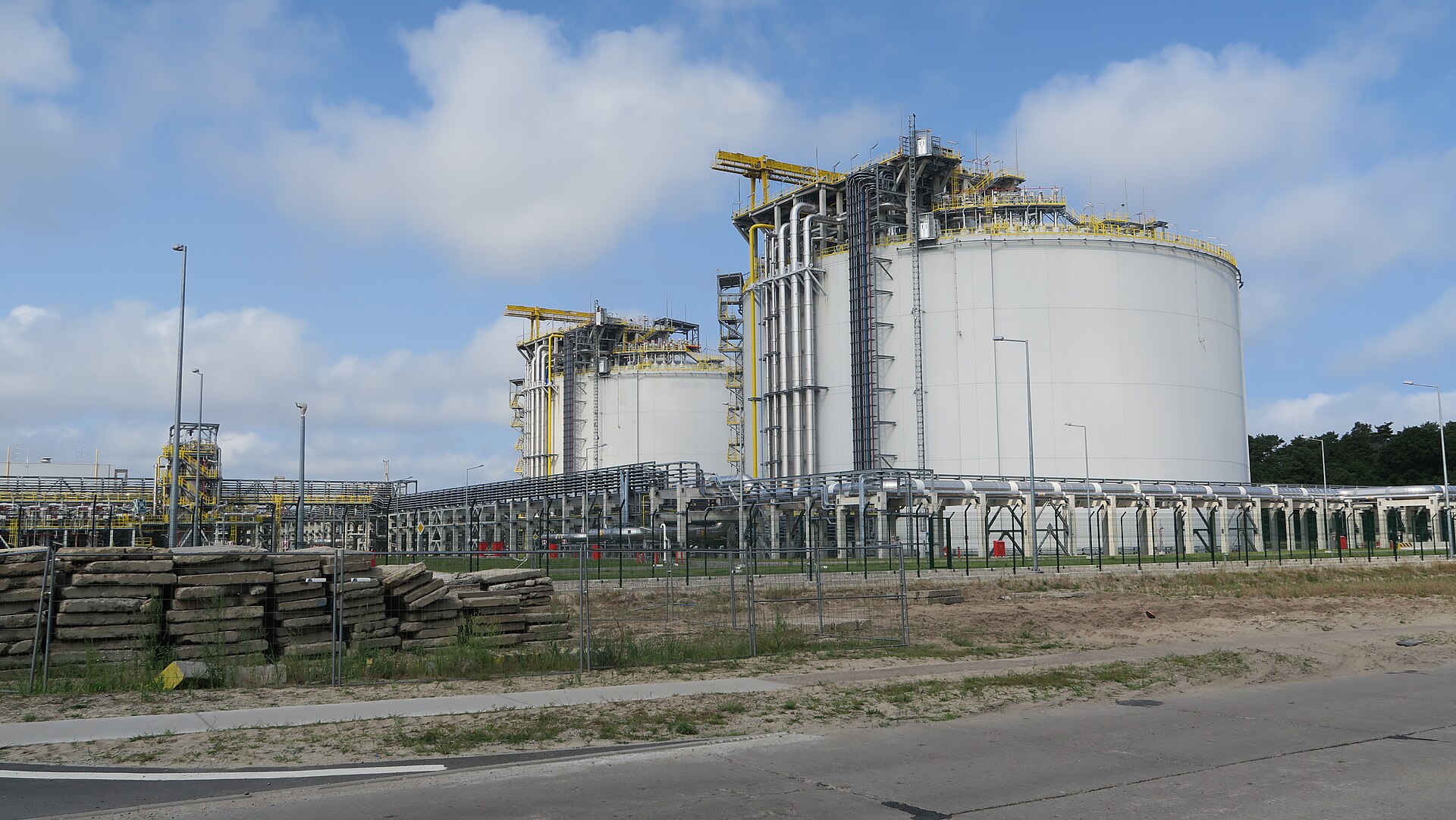
Winter preparedness is not a promise of cheap energy
Europe’s gas problem is no longer captured by a simple question about whether a pipeline is open. Import terminals, storage, alternative suppliers and lower consumption can give the system more flexibility while households and businesses continue to pay dearly for energy. On 8 October, the European Commission said the EU gas system was prepared for winter despite storage below historical levels. Its assessment, drawing on ENTSOG’s winter outlook, pointed to infrastructure capable of accommodating more liquefied natural gas imports. That is a statement about the system’s capacity to balance supply and demand under the assessed conditions, not a guarantee of low prices or uninterrupted supply under every shock. [1]
This distinction is especially important on 29 October, when the ECB has scheduled its next monetary-policy meeting. This analysis was prepared before that decision and does not presume its outcome. The immediate issue is how an energy shock interacts with an economy already facing higher financing costs. Adequate infrastructure can reduce the danger of a physical shortage without removing competition for cargoes, weather sensitivity or the expense of filling the gap. Energy security and price stability are related objectives, but success on one does not automatically deliver success on the other. [1][2]
Storage buys time; LNG brings a market price
Gas in storage is a buffer, not a permanent source of production. Drawing it down can cover a period of strong demand, but it leaves less protection for a late cold spell and creates a future refill requirement. The Commission’s October assessment explicitly stresses maintaining adequate stocks through winter, both to handle late-season cold and to ease replenishment the following summer. It also notes that the choice between importing LNG and withdrawing stored gas ultimately rests with market participants. A national or European preparedness assessment therefore cannot tell readers exactly when companies will buy, withdraw or hedge their supplies. [1]
Import capacity describes how much a terminal can receive and process, whereas an actual cargo depends on availability, transport, contracts and price. If European buyers must compete more aggressively for flexible supply, the marginal cargo can become expensive even when physical infrastructure has spare capacity. Conversely, mild weather or weaker demand can reduce the amount of additional gas required. These are conditional mechanisms, not claims about today’s cargo flows. The Commission identifies diversification, greater LNG capacity and reduced demand as improvements relative to winter 2021–22; those improvements change the vulnerability without abolishing it. [1]
The ECB had already tightened before today’s meeting
The most recent policy decision used here is dated 10 September. The ECB raised all three key interest rates by 25 basis points, bringing the deposit facility rate to 2.50%, the main refinancing rate to 2.65% and the marginal lending rate to 2.90%, effective 16 September. Its September baseline projected headline inflation averaging 3.0% in 2026, 2.5% in 2027 and 2.1% in 2028. These are dated projections, not realised October inflation and not the rates announced at the meeting scheduled for later today. The decision described upside inflation risks and downside growth risks arising from the conflict in the Middle East. [3]
A policy rate cannot produce additional gas or immediately repair damaged energy infrastructure. It can influence borrowing, spending, wage bargaining and the willingness or ability of companies to pass higher costs into prices. Tightening therefore addresses propagation and persistence rather than the initial physical shock itself. The difficulty is that weaker demand can also reduce employment, investment and household income. The ECB’s meeting-by-meeting approach reflects that trade-off: reacting too little could allow inflation to spread, while reacting too strongly to a temporary shock could impose unnecessary economic costs. Neither conclusion follows from a single gas quotation. [3][5]
The decisive question is how far the shock travels
Higher energy prices first affect products directly linked to fuel and electricity, but the broader consequences depend on contracts, production methods and pricing decisions. A manufacturer may initially absorb the increase in its margin. It may later raise selling prices, reduce output, change suppliers or postpone investment. A household may cut other spending when its energy bill rises. Those responses can pull inflation and growth in different directions. In his 5 October speech, ECB Executive Board member Philip Lane identified the magnitude and likely duration of the supply shock, and the scale and persistence of pass-through into non-energy inflation, as central considerations. [5]
Wages add another stage rather than an automatic result. Workers may seek compensation for lost purchasing power, but negotiated increases depend on labour-market conditions, productivity and bargaining arrangements. Companies may then absorb higher wages or pass them on. The September projections put inflation excluding energy and food at 2.5% in 2026, 2.6% in 2027 and 2.3% in 2028, illustrating why the assessment cannot stop at the immediate fuel component. Those figures remain forecasts. Evidence of persistence would require subsequent price and wage data, not an assumption that every increase in gas must generate an enduring wage-price spiral. [3][5]
For companies, the same shock creates different exposures
An energy-intensive manufacturer, an electricity network and a consumer-facing service business do not face the same earnings problem. The manufacturer may confront higher input costs and competition from producers in countries with different energy systems. The service business may have limited direct fuel exposure but lose customers as households economise. A supplier may gain revenue from higher prices while facing contractual, operating or political constraints of its own. These are differences in business models, not a list of guaranteed winners and losers. The useful comparison follows energy intensity, hedging, contract renewal dates, pricing power and the share of sales exposed to weakened demand.
Equity valuation adds expectations to those operating effects. Lower margins matter differently when investors already expected a difficult year than when a company was priced for uninterrupted growth. Higher interest rates can also change financing costs and the discount rate applied to future earnings. A share-price decline cannot by itself establish which mechanism dominated, and membership of an energy or industrial sector is insufficient evidence. For a company-specific conclusion, results, guidance, cash flow and debt maturities would need to corroborate the thesis. This article supplies a framework grounded in the official energy and policy assessments, not an attribution of current stock-market movements. [1][3][5]
Bonds and the euro can respond through competing channels
Shorter-maturity euro-area rates are sensitive to the expected policy path, but longer-dated yields also include compensation for inflation, duration and uncertainty. The ECB’s September meeting account, published on 8 October, discussed higher real term premia and the amount of debt issuance markets would need to absorb. An increase in a ten-year yield is consequently not a clean measurement of an expected ECB hike. Inflation expectations, fiscal conditions and the price of holding long-lived risk can all contribute. Similarly, a lower yield could reflect improving inflation prospects or deteriorating growth; its direction alone does not identify the cause. [4]
The euro faces another tension. More expensive energy imports can worsen the external income balance, while a relatively firmer expected interest-rate path can support demand for euro assets. Risk sentiment, the policies of other central banks and capital flows can outweigh either effect. A depreciation can raise the local cost of dollar-invoiced imports, but the outcome depends on contracts and hedging. It would therefore be misleading to predict the currency from gas storage or one policy decision alone. What matters is the interaction between the physical import bill, relative rates and the confidence of investors in the economic outlook, not a mechanical rule that expensive gas always means a weaker euro. [1][3][4]
Dated evidence should not be turned into a live market claim
The account released on 8 October described European gas prices as having reached their highest level since early 2023 and identified low storage as a potential further source of price pressure. It reflects the information and discussion surrounding the September meeting, rather than an independently verified gas quote at the moment this article is read. The Commission’s winter assessment answers a different question about flexibility and preparedness. Both can be valid: expensive supply and a system able to meet demand are not contradictory conditions. Keeping the publication date and the observation period separate prevents an old market description from masquerading as a current price. [1][4]
This analysis does not assign an observed bond, currency or equity move to the energy shock. Such an attribution would require timestamped prices, the timing of new information and competing explanations. It also does not announce the outcome of the 29 October ECB meeting. The decision, accompanying explanation and subsequent data may change the balance of risks. The official calendar confirms an event date, not the content of that event. Reading the eventual announcement against the September baseline will be more informative than assuming that the existence of a meeting means a predetermined policy response. [2][3]
Three paths to watch, without pretending to forecast them
A more favourable path would combine manageable winter demand, available cargoes and fading energy pressure, with limited transmission into non-energy prices. Its confirmation would be physical supply data and later inflation releases, not simply a decline in one futures contract. A more difficult path would feature continued high costs, broader corporate pass-through and persistent inflation even as household spending slows. A severe disruption would test whether import and storage flexibility can compensate for a further supply loss. These scenarios have different implications for output, financing and policy, but the sources do not establish probabilities or justify an asset-price target. [1][3][5]
The monitoring priorities follow from those differences: storage withdrawals and refill needs, actual imports and demand, retail pass-through, non-energy inflation, wage developments, corporate margins and the ECB’s stated assessment. A headline about preparedness should not erase price risk, and a headline about expensive gas should not imply inevitable rationing. Europe’s adaptation has improved its options, while monetary policy must still judge how lasting the inflation consequences will be. The central market lesson is to separate available energy, its cost, the response of the economy and the financing conditions that follow. They are connected stages, not interchangeable measures of the same risk. [1][3][5]
Sources & scope
An explanatory analysis using the dated publications below. Historical figures are not live readings; scenarios are conditional, and market co-movement does not establish causation. Not investment advice.
- [1] European Commission, winter gas preparedness (8 October 2026)
ENTSOG-based assessment of winter flexibility, lower-than-historical storage, greater LNG import capacity and the importance of late-winter stocks and summer refill. No current storage percentage or guaranteed gas price is asserted.
- [2] ECB, Governing Council calendar
Confirms the monetary-policy meeting scheduled for 29 October 2026. Written before its outcome; the article does not claim a decision from that meeting.
- [3] ECB, monetary-policy decision (10 September 2026)
25-basis-point increase; deposit/main refinancing/marginal lending rates of 2.50%/2.65%/2.90% effective 16 September. September inflation projections, not October readings or today's policy decision.
- [4] ECB, account of the September meeting (published 8 October 2026)
Dated discussion of gas prices, storage, inflation expectations and real term premia; not a live commodity or bond quote.
- [5] Philip Lane, inflation outlook and monetary policy (5 October 2026)
Magnitude and duration of the supply shock, energy-to-non-energy pass-through and other forces affecting the medium-term inflation outlook. Market scenarios are conditional analysis, not predictions.