




Energy security is a system, not a supplier list
Energy security is sometimes reduced to a simple question: which country supplies the fuel? That question matters, but it leaves out much of the system. Gas must be produced, transported, received and delivered to the people who use it. Each stage needs infrastructure, commercial agreements and reliable operations. An economy can diversify its suppliers while remaining dependent on a single import terminal, a constrained domestic pipeline or an electricity system with little flexibility. The strongest analysis follows the entire delivery chain rather than counting flags on a map.
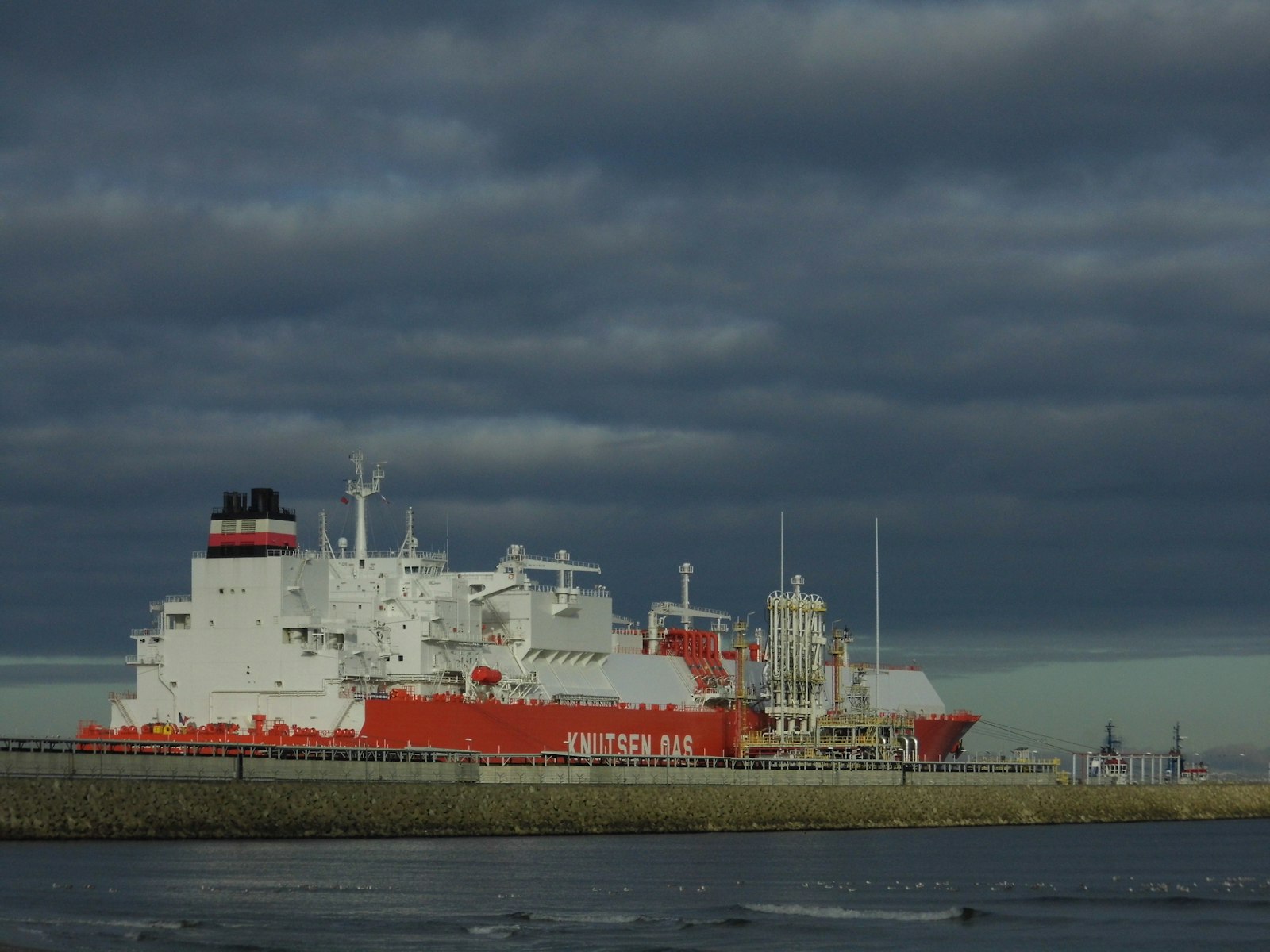
Liquefied natural gas, or LNG, changes that chain by cooling natural gas into a liquid for transport by ship. It gives buyers access to suppliers that are not connected by pipeline. That flexibility is strategically valuable, particularly when an existing pipeline relationship becomes unreliable. But an LNG cargo still needs a functioning liquefaction plant at origin, a suitable vessel and a receiving terminal with available capacity. Diversification reduces some risks; it does not make energy independent of geography, technology or financial conditions. This article draws on the IEA’s dated gas-security analysis, not on an assertion about today’s cargo movements.
From a fixed pipeline to a competitive cargo market
A pipeline often connects a relatively fixed group of producers and consumers. LNG can travel between different regions, subject to contractual terms, ship availability and terminal compatibility. This makes it possible to redirect supplies when one buyer needs more gas, but it also means that buyers can compete with demand elsewhere. Cold weather in one region, a production outage in another or a change in industrial demand can influence the price needed to attract a cargo. A geographically diversified supply portfolio may therefore remain exposed to international price competition.
That does not mean every shipment is sold to the highest bidder on a daily basis. Long-term contracts can specify delivery obligations, pricing formulas and destination conditions. Some buyers have more flexibility to resell or redirect cargoes than others. Contract structure determines how quickly a spot-market shock enters the actual cost of supply. An analyst who looks only at a benchmark gas quotation can miss that distinction. A household tariff, a utility’s import bill and the earnings of an LNG producer may respond at different speeds to the same market episode.
Why import capacity is not the same as available gas
Building an import terminal creates the ability to receive LNG, not a guarantee that cargoes will arrive at an affordable price. The terminal must be connected to the domestic gas network, and that network must carry fuel to the areas that need it. A bottleneck inland can leave spare receiving capacity at the coast while customers elsewhere remain constrained. Storage adds another layer: it helps bridge seasonal demand and temporary interruptions, but withdrawals depend on technical limits and the quantity already stored. A headline about new capacity should therefore be read alongside utilisation and network access.
Export projects have equally important constraints. Financing, construction, permits and commissioning can delay the moment when an announced project delivers reliable supply. Planned capacity should not be treated as operating capacity. Even an operating facility can experience outages. The IEA’s gas-security work examines supply concentration, operational disruptions and the importance of flexibility precisely because the system is more complex than a list of projects. For market analysis, distinguish a signed agreement, a final investment decision, a plant under construction and a facility actually producing cargoes.
How gas costs reach industry and electricity
Natural gas is both a fuel and an industrial input. Its cost can affect heating, electricity production and activities such as chemicals and fertilisers. The economic exposure varies across countries and firms. A manufacturer with a flexible energy mix may adjust more easily than one whose process depends on gas. A company with hedges or long-term supply agreements may initially be protected while a competitor buying at current prices faces immediate pressure. Looking at the sector name alone is not enough to assess the effect on margins or output.
In electricity markets, the relationship also depends on the local generation mix and pricing rules. Gas-fired plants can influence wholesale prices when they are needed to meet demand, but their role changes with renewable output, nuclear availability, water conditions and network constraints. Higher gas prices do not mechanically imply the same electricity-price increase everywhere. Nor does a wholesale increase necessarily pass immediately into household bills. Regulation, fixed-price contracts and government measures can change the timing and who bears the cost. Those details matter more than a universal claim that energy prices are rising together.
Different assets price different parts of the story
The most direct observations are regional gas benchmarks, relevant LNG pricing, storage levels and the performance of exposed businesses. A producer may benefit from stronger prices while an energy-intensive importer faces weaker margins. A utility can occupy several positions at once: generating power, buying fuel and serving customers under regulated tariffs. Its sensitivity cannot be inferred simply from the word energy. Debt, hedging, contract duration and political intervention can all change the earnings outcome. Company disclosures should be used to identify the actual exposure.
Currencies and bonds are further along the analytical chain. More expensive energy imports can worsen an importing economy’s trade balance, but exchange rates also respond to monetary policy and wider capital flows. Inflation pressure can influence rate expectations; weaker activity can pull those expectations in another direction. Oil prices may move differently from gas because the supply networks and uses are not identical. Observing several assets move near a gas-security announcement is useful, but it does not prove the announcement caused every move. Timing, expectations and competing news must be examined before drawing an interpretation.
Resilience and the energy transition are related, not identical
Efficiency, alternative fuels, renewable electricity and demand flexibility can reduce dependence on imported gas. Their contribution depends on which uses can be substituted and how quickly. Insulating buildings is different from changing an industrial process; adding renewable generation still requires a grid capable of carrying it. Some measures lower consumption gradually, while storage and flexible demand can help manage shorter-term stress. Treating all transition investments as an immediate replacement for fuel imports exaggerates what they can deliver in a specific winter or disruption.
LNG infrastructure creates a second trade-off. Additional capacity can improve near-term security, yet long-lived projects require a view about future utilisation and demand. If consumption falls faster than expected, assets may earn less than their owners planned. If it falls more slowly, inadequate investment can leave the system exposed. Neither outcome can be settled by a slogan. The analysis should compare project timelines, contractual commitments and alternative demand paths. Environmental performance also requires attention to methane emissions and the full supply chain, not merely the emissions at the point of combustion.
A monitoring framework that avoids false alarms
Start with the physical evidence: production outages, actual terminal operations, storage conditions and the routes used by relevant cargoes. Next, distinguish local constraints from a global shortage. A pipeline bottleneck can raise one region’s price without implying that every market lacks gas. Then examine contracts and demand flexibility to understand who is exposed. Dated IEA reports provide the structural background; current conditions require current evidence. An older forecast should never be silently relabelled as a live reading or assumed to describe October 2026.
Finally, state a conditional interpretation. If an outage persists while demand is strong and alternatives are limited, pressure on buyers may increase. If weather is mild, storage is adequate or substitute supplies become available, the same disruption may have a smaller effect. The purpose is not to predict a crisis from every interruption, but to explain the conditions under which it matters. LNG has made gas trade more flexible and more interconnected. Understanding both sides of that change gives a clearer view of energy security than assuming diversification has either solved the problem or achieved nothing.
Sources & scope
An explanatory analysis using the dated publications below. Historical figures are not live readings; scenarios are conditional, and market co-movement does not establish causation. Not investment advice.
- IEA, Global Gas Security Review 2024
Dated assessment of supply flexibility, disruptions and LNG security; not current cargo data.
- IEA, Gas
Background on natural gas use, supply and its role in the energy system.