



A diplomatic failure is not the disappearance of climate policy
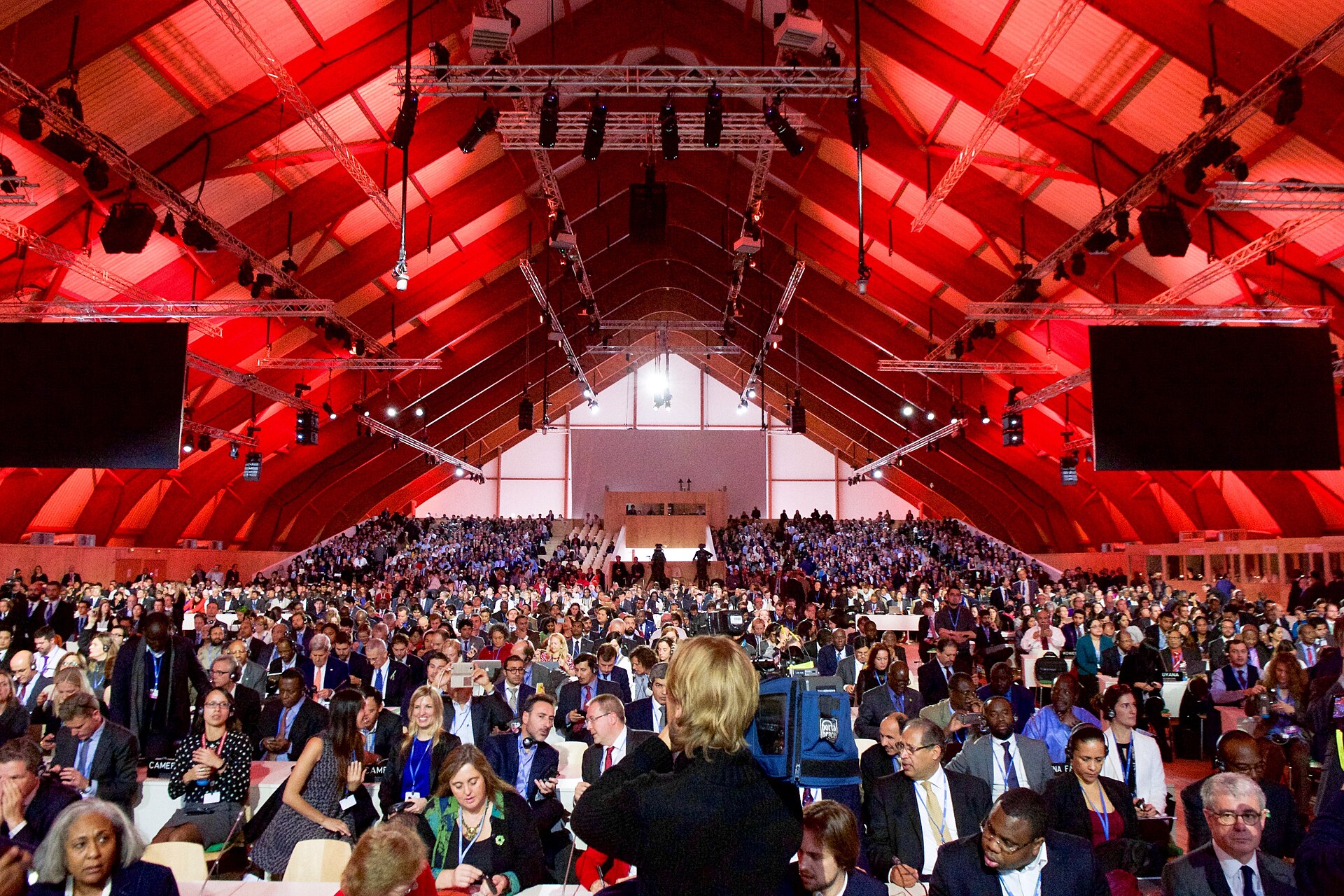
COP31 closed in Antalya on 22 November without agreement on its overarching climate pact. Disputes over fossil fuels and finance outlasted two weeks of negotiations and two days of overtime. The European Union and several other delegations rejected a final text they considered weaker than the moment required. The UN account records that the main political decisions were not adopted, while also noting progress on a just transition agreement and initiatives around electrification, resilience and investment. Calling the outcome either a complete success or the end of all cooperation would erase that distinction. [1][2]
For markets, the consequential question is what changes in enforceable policy and investable cash flows. Failure to adopt a new overarching pact does not itself repeal existing national regulations, cancel signed power contracts or remove the physical effects of warming. It does reduce the value of assuming that a common international framework will clarify every country's transition timetable. The investment landscape becomes harder to describe with one global narrative. A financed project under durable domestic rules can remain commercially viable while a similar project elsewhere faces uncertain subsidies, missing infrastructure or an unreliable buyer.
Finance was a delivery problem, not just a disagreement over words
The dispute went beyond whether the final text explicitly mentioned fossil fuels. Poorer countries also objected to the absence of clear financial commitments to help them adapt to rising temperatures. The BBC reports that COP30 had agreed to triple adaptation finance, but the COP31 draft offered neither concrete figures nor a baseline for measuring that pledge. A multiplication target without an agreed starting point and delivery timetable leaves countries unable to judge what resources they can actually plan around. This article does not assign a dollar value to that unresolved promise. [2]
Adaptation finance supports a different economic task from reducing emissions. Flood defences, water systems and heat-resilient infrastructure protect people and productive assets against damage; they do not necessarily sell an easily priced product. Their social return can be substantial even when the project has limited direct revenue. That makes the funding structure decisive. Grants, concessional loans, public procurement and guarantees distribute costs and risks differently. Substituting an expensive commercial loan for a grant can fund construction while increasing a vulnerable government's future debt burden. The headline amount alone cannot establish that the recipient is better protected financially.
Turkey attracted capital even as the global bargain stalled
Commercial diplomacy continued alongside the negotiations. Reuters reported on 20 November, before the summit's collapse, that Turkey said it had agreed deals and plans worth more than $26 billion since the conference began. The reported package included a preliminary $15 billion renewable-energy deal with China and $5.1 billion in financing agreements with development banks, alongside accords with Saudi Arabia and Canada. Those components sit inside the broader reported total; they must not be added to it as separate extra investment. Nor should preliminary plans be described as money already disbursed. [3]
The contrast is important: a host can attract bilateral investment without securing an ambitious multilateral agreement. But an announcement, a financing agreement, a final investment decision and an operating asset are different stages. Each leaves different risks unresolved. The next evidence to examine is contractual scope, committed equity, lender conditions, permits and execution dates. Development-bank involvement may improve a project's financing options, but the public report does not establish that every announced investment has reached financial close. Treating the aggregate as immediate construction revenue would overstate both certainty and speed.
Policy uncertainty can make affordable technology expensive to finance
Electricity projects require significant spending before they produce revenue. Lenders therefore need confidence in the tariff, the customer's creditworthiness, access to the grid and the ability to enforce contracts over time. Cheap equipment is not enough when the revenue framework is unstable. Higher required returns increase the annual payment needed to recover the same upfront investment. That is a financing mechanism, not a claim that COP31 has already caused borrowing costs to rise by a measured amount. No post-summit yield or equity-price reaction is asserted here.
Currency exposure can compound the problem. A project receiving local-currency revenue but servicing foreign-currency debt is vulnerable if the exchange rate moves against it. Hedging, indexed tariffs or public guarantees can redistribute that exposure, though none makes the cost disappear. Guarantees can create contingent liabilities for the state, and indexed tariffs can transfer pressure to electricity users. Investors should read who ultimately bears each risk rather than assume that an international funding announcement solves it. A bankable project needs a coherent allocation of risks, not merely a large addressable market or a climate label.
Electrification requires a functioning system, not just generation capacity
There were narrower areas of cooperation. The BBC reports that more than 80 countries supported Turkey's objective of raising electricity's share of global energy use to 35% by 2035. This is a supported target, not an observed share or a binding construction schedule for every signatory. It also concerns electricity's share of energy use, not the percentage of electricity generated from renewable sources. Confusing those measures would turn an electrification ambition into a different claim about the generation mix. [2]
The commercial chain includes generation, transmission, distribution, storage and the equipment that lets users switch from direct fuel consumption to electricity. Capacity that cannot connect to the network may earn little, while growing electricity demand can expose bottlenecks elsewhere. Grid access, connection queues, reliability and the timing of customer conversion consequently matter as much as installed capacity. This does not justify attaching any familiar technology or utility stock to COP31. An individual company's relevance requires a specific activity, contract or documented exposure; participation in a broad energy theme is insufficient evidence of a financial benefit.
Physical climate risk reaches balance sheets even without a new pact
A stalled negotiation does not stop floods, heat or drought from affecting infrastructure and production. The UN Secretary-General's response stressed intensifying impacts and called for stronger adaptation support, particularly for vulnerable countries. These risks have different financial channels from transition policy: damaged assets, interrupted operations, higher repair bills and pressure on public services. They remain relevant whether or not governments can agree on a shared final text. Political disagreement and physical exposure should therefore be analysed separately rather than treated as offsetting forces. [1]
Insurance is one transmission channel, but a premium increase is not the only possible adjustment. Coverage limits, deductibles, exclusions and availability can change the amount of risk retained by an owner. A property with a stable book value may become more expensive to protect or harder to finance. For banks, collateral quality and business continuity matter alongside the borrower's existing accounts. Governments can inherit emergency spending or support obligations. None of these effects should be quantified from a summit headline alone; meaningful analysis requires the asset's location, protection, coverage and actual loss history.
Different instruments answer different financial questions
Carbon allowances, fossil-fuel benchmarks, power prices and renewable-energy shares are not interchangeable climate indicators. An allowance price belongs to a specific regulated system, with its own supply rules and compliance obligations. Oil and gas prices also reflect production, inventories, transport and demand. Electricity pricing depends on local market design and the generation mix. A summit's failure may affect expectations, but those expectations operate alongside many other drivers. A coincident move is not proof that the conference caused it, and a global political outcome does not create a universal carbon price.
Equities add the distinction between revenue opportunity and shareholder return. Equipment suppliers need orders that can be delivered profitably; developers need viable tariffs and finance; network operators need recoverable spending under their regulatory arrangements. Existing valuations may already incorporate optimistic growth assumptions. Fossil-fuel producers, meanwhile, do not receive a guaranteed earnings uplift simply because a draft omitted explicit fossil-fuel language. Their realised prices, production costs and liabilities still matter. The useful market reading is specific and conditional, not a blanket conclusion that climate failure makes one entire sector a winner and another a loser.
The next test is whether commitments become protected, operating assets
The immediate watchpoints are practical: the legal status of agreements that did survive, domestic policy decisions, actual adaptation-finance allocations and progress from Turkey's preliminary investment plans to signed, funded projects. For electricity, monitor connection and procurement milestones rather than count capacity announcements alone. For climate-vulnerable borrowers, distinguish affordable support from additional debt and check when funds arrive. Preliminary commitments remain distinct from completed disbursements, and any market reaction requires its own dated evidence rather than an assumed response to the negotiating outcome. [1][2][3]
The deeper lesson of Antalya is a widening separation between diplomatic ambition and the institutions that deliver investment. International coordination can reduce uncertainty and help share costs, but project economics still depend on credible contracts, reliable infrastructure and manageable financing. Its failure makes those domestic and bilateral details more important, not less. The climate-related investment bill remains because energy systems must function and exposed assets still require protection. Whether that bill produces productive capital or stranded promises will be determined by execution, the distribution of risk and the ability to convert commitments into durable services.
Sources & scope
An explanatory analysis using the dated publications below. Historical figures are not live readings; scenarios are conditional, and market co-movement does not establish causation. Not investment advice.
- 1. UN News, COP31 ends without climate pact (22 November 2026)
Main political decisions not adopted; fossil-fuel disagreements, delegation objections and narrower progress. Primary institutional account, read in full.
- 2. BBC, COP31 fails to reach major climate deal (22 November 2026)
Adaptation-finance baseline dispute and reported support for a 35% electrification target by 2035. Target is not an achieved outcome.
- 3. Reuters via Al-Monitor, COP31 delivers deals for host Turkey (20 November 2026)
Pre-close report: more than $26 billion in deals and plans, including a preliminary $15 billion China agreement and $5.1 billion in development-bank financing. Announcements are not completed disbursements.