



A week that broke the pattern
For most of 2026, good news from artificial intelligence companies lifted markets. This week it did not. Nvidia reported results that beat expectations and raised its outlook. Anthropic, the maker of the Claude models, completed the largest initial public offering in history. Yet by Friday 20 November, global equities had recorded their biggest weekly decline since 2020.
The losses were concentrated where the AI boom had been strongest. Taiwan’s benchmark index fell 6.2 percent on Friday and about 17.5 percent over the week, its steepest five-day fall since 1990. The Philadelphia semiconductor index fell 10.7 percent on Friday and 17.1 percent for the week. Japan’s Nikkei 225 lost 5.1 percent and South Korea’s Kospi 5.2 percent in a single session, with Samsung Electronics and SK Hynix down about 7 percent each.
This article explains what investors are now questioning, why positive news failed to help, and how the selloff travelled from US technology shares to Asian markets, currencies and bonds. It describes exposures and documented moves; it does not forecast where prices will go.
A record listing that became a sell-the-news event
Anthropic priced its shares at 83 dollars on Wednesday evening, above an indicated range of 70 to 78 dollars. The deal raised a record 81 billion dollars, and a follow-on private placement lifted the total to more than 107 billion dollars. Trading opened at 111.50 dollars, 34 percent above the offer price.
The gain did not last. The shares pared their advance during the first session, fell as much as 14.5 percent on Friday and closed at 88.30 dollars, only a few dollars above the offer price. Many investors had hoped that a strong debut would revive the whole sector. Instead, the listing was treated as an opportunity to sell.
Saxo’s chief investment strategist Charu Chanana summarised the concern: a successful listing does not answer questions about returns on AI spending. It brings more investor capital into frontier models, a segment where, in her words, competition is fierce, pricing power is weakening and profitability remains uncertain.
From proof of demand to proof of returns
The central change is in what investors ask for. Until recently, evidence of demand for chips and computing capacity was enough to support valuations. Nvidia’s quarter provided that evidence again, and the shares still finished the week sharply lower. As Chanana put it, the market is no longer looking for proof of AI demand alone; it wants evidence that the extraordinary spending across the ecosystem can generate sustainable returns.
Several concerns have accumulated at the same time. Reporting this week cites stretched valuations, rising debt used to finance data centres, so-called circular financing in which suppliers invest in their own customers, growing local opposition to data centre projects, and leadership uncertainty at Nvidia after the departure of Jensen Huang. A short-seller report on AMD’s ties to Chinese entities and new US restrictions on China’s access to advanced chips added a regulatory dimension.
Politics also plays a role. Commentary from Bloomberg and Reuters links part of the pressure to the Democrats’ sweep of Congress in the 3 November midterm elections, which investors read as a sign of tougher scrutiny of the industry and of data centre expansion. That is an interpretation of market sentiment, not a policy that has been adopted.
Why Taiwan fell hardest
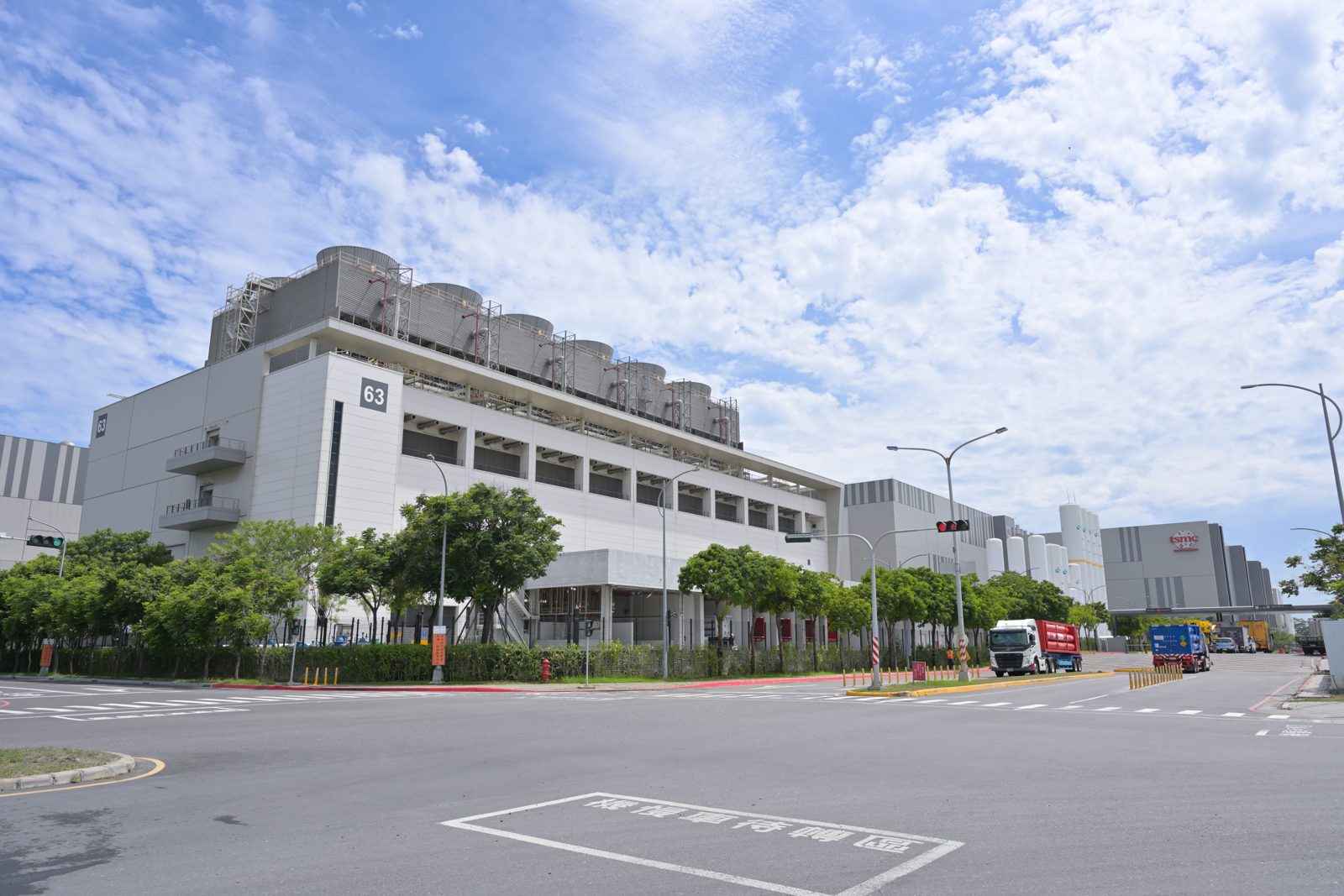
Technology makes up more than 70 percent of Taiwan’s benchmark, which leaves it unusually exposed to sentiment towards the sector. The index has lost close to 28 percent since its record high on 6 October, about 1.12 trillion dollars in market value according to LSEG data, while remaining up roughly 24 percent for the year.
Leverage turned a correction into a rout. Barclays wrote that forced selling by retail investors was the main driver of Monday’s decline, and several fund managers said margin loan balances were still too high. When prices fall, investors who borrowed to buy shares must add collateral or sell, and those sales push prices lower again. Foreign funds have also sold more than 56 billion dollars of Taiwanese stocks on a net basis this quarter.
The authorities have responded. Taiwan’s Financial Supervisory Commission tightened short-selling curbs twice this month, most recently capping intraday short-sale orders for borrowed securities at 1 percent of a stock’s average daily volume. Research firm S3 Partners noted that such limits do not remove selling by investors who are reducing existing long positions, which is the main source of pressure.
How the selloff spread
Equities. The Nasdaq is down about 15 percent from its early October record, and the Dow Jones Industrial Average and the S&P 500 each closed the week in correction territory, meaning at least 10 percent below their peaks. MSCI’s world index fell for a seventh consecutive session. The VIX index of expected US equity volatility reached its highest level since March. Consumer staples was the only S&P 500 sector to rise on Friday, a classic defensive pattern.
Currencies. Foreign selling weighed on Asian currencies. The Indonesian rupiah hovered near a record low against the dollar, and the Korean won and Philippine peso edged lower. The dollar itself held close to its highest level in about 20 months, supported both by demand for safety and by expectations that the Federal Reserve will raise rates in December.
Bonds and commodities. Government bonds rallied as investors sought safety. The US 10-year yield fell for a fifth straight session to just below 5 percent, down about 19 basis points over the week, and German 10-year yields fell 10 basis points, the most since April. Copper slid on concerns about AI-related demand before partly recovering. Gold and silver, often seen as havens, instead fell to 14-month lows, a sign that some investors were selling what they could to raise cash.
Higher rates make the adjustment harder
The selloff is unfolding while monetary policy is tightening rather than easing. Minutes of the Federal Reserve’s October meeting showed that nearly all officials expect a quarter-point rate increase in December, and futures markets treat that move as almost certain. J.P. Morgan now expects further increases in January and March. In Europe, Bundesbank President Joachim Nagel signalled a rate increase at the European Central Bank’s December meeting.
This matters for technology valuations. Companies whose profits are expected far in the future are more sensitive to interest rates, because those future profits are discounted at a higher rate. Higher borrowing costs also raise the price of financing data centres with debt. In previous episodes of market stress, investors could hope for central bank support; this time inflation limits that option.
Correction or turning point
It is too early to say whether this is a correction within a longer boom or the start of a deeper reassessment. Several facts argue for caution in both directions. Demand for AI computing remains strong according to company results, and most major indices are still higher than at the start of the year. At the same time, the speed of the decline, the role of leverage and the failure of good news to lift prices are typical features of crowded positions being unwound.
Traders’ own commentary reflects that uncertainty. A Goldman Sachs sales note said that every day looks like a day to buy on technical grounds, but warned that if highs could go higher in 2026, lows may also go lower. Pepperstone’s head of research said a sustained rise in Anthropic shares was hard to envisage without a broader recovery in risk appetite.
What to watch next
Leverage in Asia. Margin loan balances in Taiwan and South Korea, and whether forced selling slows, will indicate whether the mechanical part of the decline is ending.
Spending plans. Any change in data centre investment guidance from the largest cloud companies would directly test the question of returns that now dominates the market.
US inflation and the Fed. The PCE price index, released before the Thanksgiving holiday, and the Fed decision on 9 December will shape the rate backdrop for technology valuations.
Regulation and politics. Concrete measures on chip exports, data centre permits or industry scrutiny would matter more than expectations of them.
The lesson of this week is that markets moved from rewarding growth in AI demand to asking who earns a return on the investment. Until that question finds clearer answers, the most exposed markets, led by Taiwan, are likely to remain the most volatile.
Sources & scope
An explanatory analysis using the dated publications below. Historical figures are not live readings; scenarios are conditional, and market co-movement does not establish causation. Not investment advice.
- Reuters via Business Recorder, AI selloff drives Taiwan stocks to worst week since 1990 (21 November 2026)
Taiwan index down 6.2% Friday and 17.5% on the week; down nearly 28% and USD 1.12 trillion since 6 October; Samsung and SK Hynix down 7%; rupiah near record low; concerns over valuations, debt, data-centre opposition and Jensen Huang’s departure.
- Reuters, Tech leads global stocks rout, Treasury yields fall (20 November 2026)
Global stocks in biggest weekly drop since 2020; SOX down 10.7% Friday and 17.1% on the week; Anthropic down as much as 14.5%, closed at $88.30; gold and silver at 14-month lows; consumer staples only rising sector.
- Taipei Times (Bloomberg), TAIEX plunges almost 18% in worst week since 1991 (21 November 2026)
Tech above 70% of TAIEX; FSC short-sale cap cut to 1%; S3 Partners on short interest; Barclays on retail forced selling; foreign net selling above USD 56 billion this quarter; Goldman Sachs sales note.
- The Edge Malaysia (Reuters), Stocks slide as AI sell-off deepens, Asia has worst week since 2020 (20 November 2026)
Nasdaq about 15% below record; Saxo quote on proof of returns; VIX highest since March; AMD short report; US 10-year below 5%; German 10-year down 10 bp; dollar near 20-month high.
- The Business Times (Bloomberg), Chip sell-off turns into stampede in Asia as AI fears grow (20 November 2026)
Saxo on circular financing and weakening pricing power; US restrictions on China’s chip access; Pepperstone comment on Anthropic.
- Al Jazeera, Asia’s stock markets dive as Anthropic debut fails to allay AI bubble fears (20 November 2026)
Nikkei down 5.1%, Kospi down 5.2%, Taiex down 6.2%, Hang Seng down 1.9% on 20 November.
- MFS, Week in Review: AI unwind extends after Anthropic IPO (20 November 2026)
Anthropic priced at $83 above $70 to $78 range, raised a record $81 billion, more than $107 billion with placement, opened at $111.50; US 10-year down 19 bp to 4.95% on the week.
- CNBC, Stock market next week: outlook for 23 to 27 November 2026 (20 November 2026)
Dow and S&P 500 each fell into a correction after neither Anthropic’s IPO nor Nvidia’s earnings revived the AI trade.
- AP, Fed minutes: higher interest rates needed in December as inflation worries mount (18 November 2026)
Nearly all officials expect a quarter-point increase in December; two floated a half-point move.
- Reuters via Investing.com, J.P. Morgan sees Fed rate hikes at next three meetings (19 November 2026)
Expected hikes in December, January and March; CME FedWatch near-certain December increase.
- CaixaBank Research, Financial Markets Daily Report (20 November 2026)
Bundesbank President Nagel signalled an ECB rate hike in December.